
Lumminova InnateSignal™
〰️
Lumminova InnateSignal™ 〰️
ENGAGING THE BODY’S INNATE SYSTEMS OF REST, REGULATION & RECOVERY
What is aVNS and how does it work?
The human body has sophisticated internal systems that continuously regulate the organs and functions essential for life. At the centre of this communication network is the vagus nerve — a major bi-directional pathway carrying signals to and from the brain and vital organs throughout the body.
The vagus nerve is also the longest and most widely distributed cranial nerve in the body. It travels from the brainstem through the neck and chest into the abdomen, sending branches to and communicating with the heart, lungs, digestive tract and other internal organs.
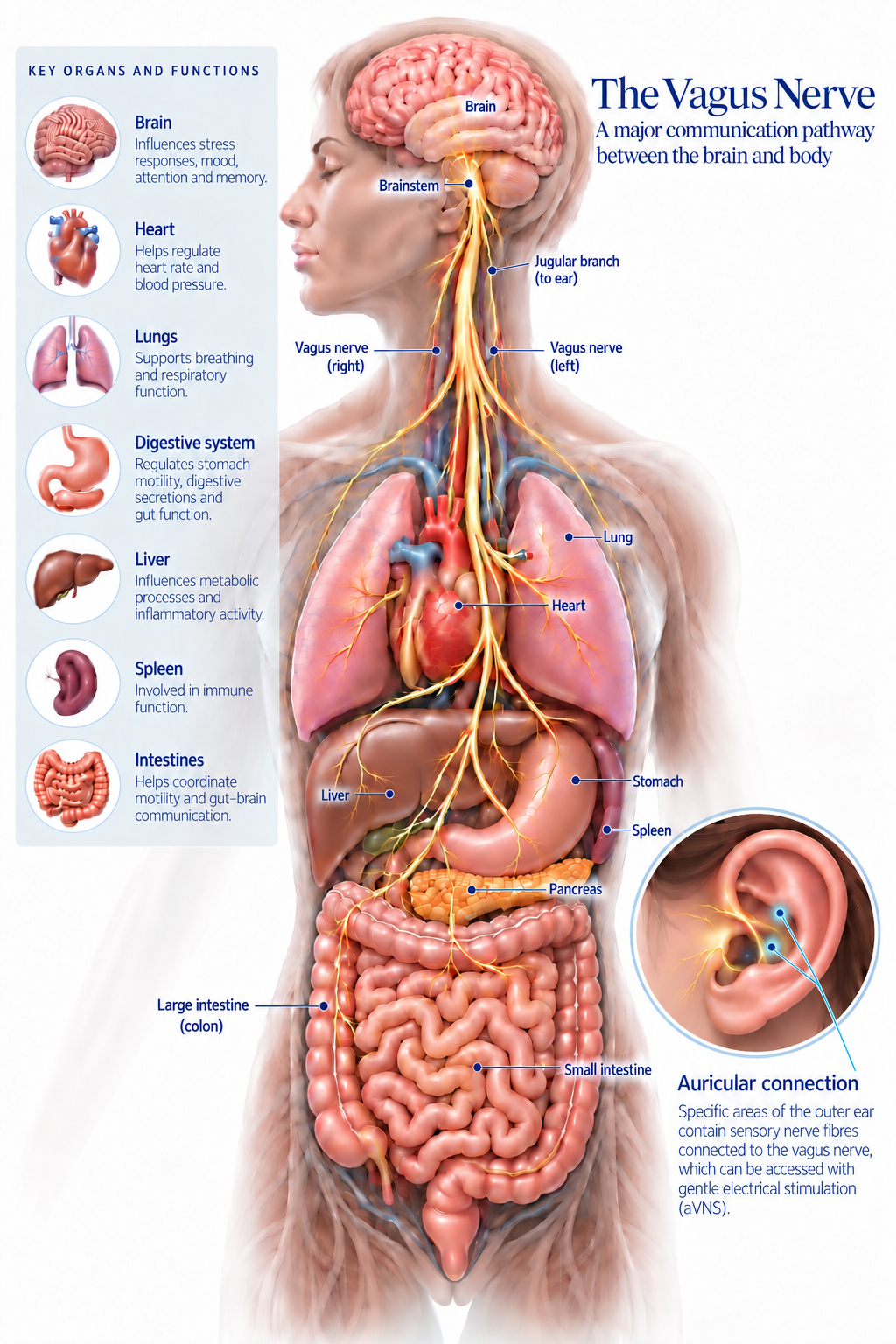
This extensive reach explains why activity in the vagus nerve influences such a broad range of body systems.
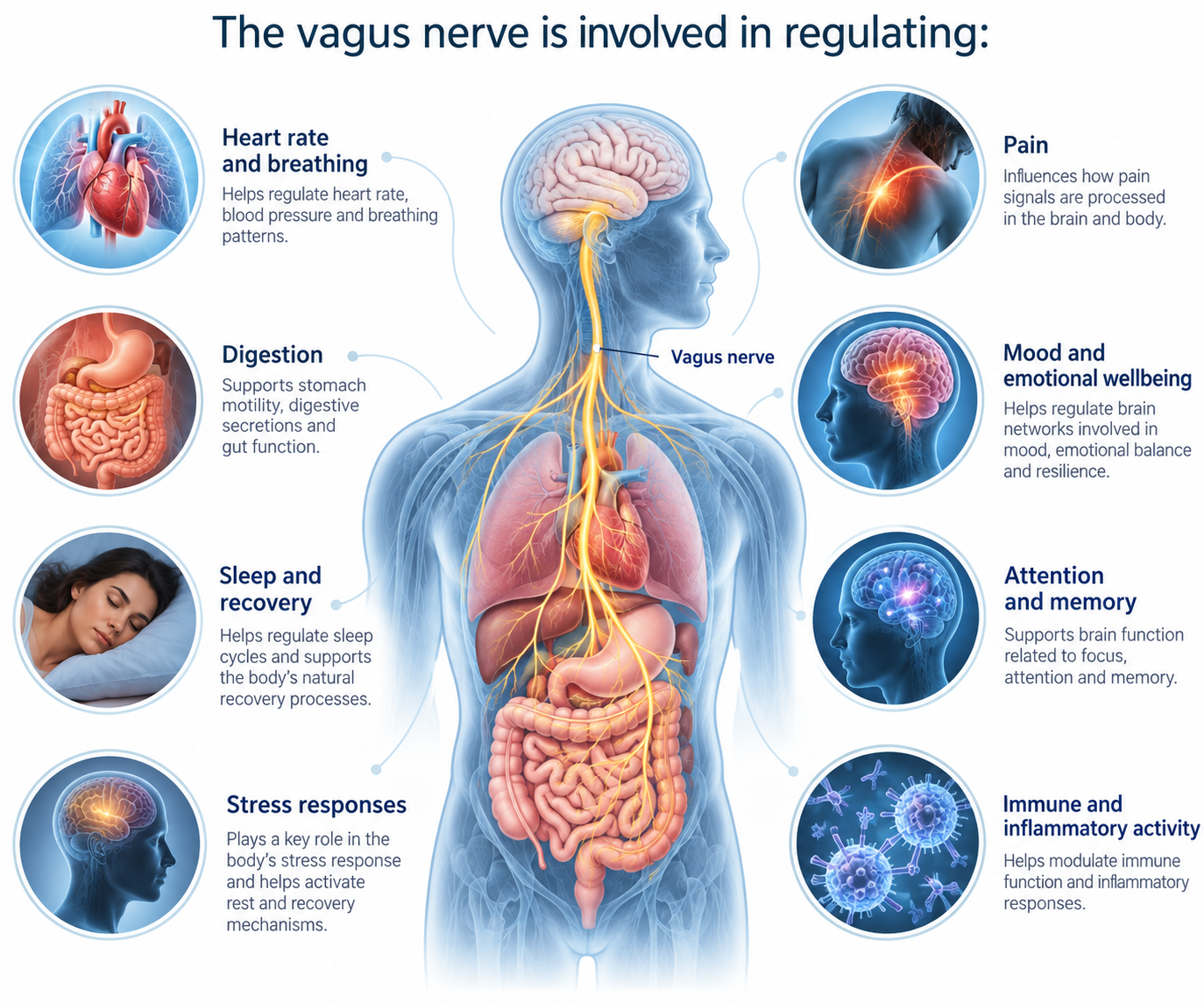
Much of this regulation happens automatically, every moment of every day, without conscious thought. It is part of the body’s innate signaling system for maintaining internal balance, responding to changing demands and potential threats.
The aim of Luminnova InnateSignal™ is to capitalize on the opportunity to tap into these existing regulatory systems which are designed to restore balance and bring about recovery.
Auricular vagus nerve stimulation (aVNS) uses barely perceptible, gentle electrical stimulation at specific areas of the outer ear where sensory fibres connected to the vagus nerve can be accessed non-invasively.
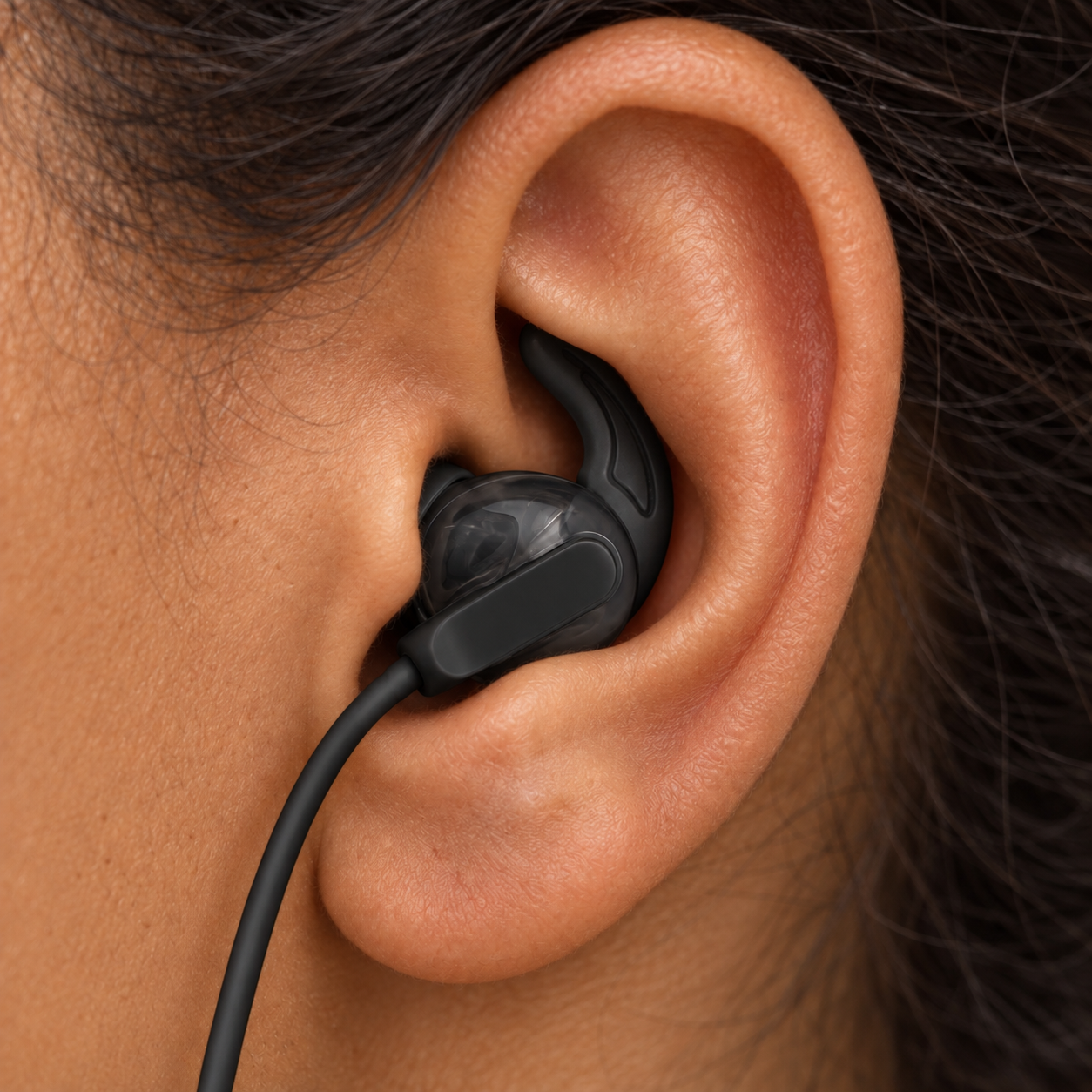
These areas provide a unique means of actively targeting the vagus nerve because the outer ear is the only location on the body where vagus nerve fibers are located just under the skin. The relative purity of vagal innervation at these sites may also minimise stimulation of non-vagal targets and unwanted effects.
Brain imaging studies provide objective evidence that the aVNS signals traveling from the ear impacts areas of the brain involved with regulating vital functions throughout the body. Importantly, extensive research has confirmed that these effects can translate into physiological changes and clinical improvements across a wide range of conditions.
The goal of Luminnova InnateSignal™ aVNS therapy is not to override the body’s natural processes, but to provide carefully selected, evidence based signals designed to engage and support its own systems of regulation and recovery.
Extensive aVNS research evidence
Research into aVNS has produced encouraging findings across a wide range of symptoms and health conditions.
We’ve organized the evidence into the sections below to make it easy to explore. You can jump straight to the topics that matter most to you, or read through them all to discover what the research is telling us and what these fascinating findings could mean for your health and everyday life.
Sleep & Recovery
Insomnia · sleep quality · sleep duration · daytime wellbeing · fatigue and recovery
Autonomic Health
Autonomic dysfunction · heart-rate variability (HRV) · POTS · dizziness and postural symptoms · autonomic regulation
Pain Regulation
Migraine and other headaches · fibromyalgia and widespread pain · neuropathic pain · chronic musculoskeletal and lower-back pain · temporomandibular disorders (TMD)
Acute Inflammation | CoVID-19
Acute COVID-19 · acute pancreatitis · sepsis
Long COVID & Post-Viral Recovery
Long COVID · dysautonomia · fatigue · brain fog and cognitive symptoms · post-viral recovery
Chronic Inflammatory & Autoimmune Conditions
Systemic lupus erythematosus (SLE) · systemic sclerosis · rheumatoid arthritis · multiple sclerosis · Crohn’s disease and ulcerative colitis · inflammatory and immune regulation
Skin Health
Rosacea · psoriasis · atopic dermatitis · vitiligo and other inflammatory or immune-mediated skin conditions
Inflammation - Substantial Objective Evidence
Cardiovascular Health
Atrial fibrillation · cardiovascular autonomic regulation · heart failure
Gastrointestinal Health
Functional dyspepsia · irritable bowel syndrome (IBS) · constipation · abdominal pain · gastrointestinal motility · inflammatory bowel disease
Neurological Health & Rehabilitation
Parkinson’s disease · epilepsy and seizure-related outcomes · stroke rehabilitation · motor recovery · neuroplasticity
Cognitive Health
Mild cognitive impairment (MCI) · memory · learning · attention · executive function · cognitive performance · Alzheimers disease
Anxiety & Depression
Depression · anxiety · stress regulation · emotional wellbeing · obsessive compulsive disorder
Women’s Health
Endometriosis · adenomyosis · primary dysmenorrhea · menstrual pain · polycystic ovary syndrome (PCOS) · emerging research into reproductive and hormonal health
Metabolic Health
Impaired glucose regulation and prediabetes · insulin resistance · glucose and lipid metabolism · obesity and weight regulation · metabolic syndrome
Cancer Support & Recovery
Cancer related pain and fatigue · post surgical recovery · cancer cell suppression
The amount and quality of research vary considerably between conditions. Some areas have been studied in larger clinical trials, while others remain at an early or exploratory stage.
The overall picture is highly encouraging: positive findings have been documented across several body systems that are closely linked by the vagus nerve and reflects its integral role in communication between the brain and body.
A clinical review identified 109 studies across 21 clinical populations and found that aVNS showed favourable effects across a range of conditions. The published research covers a wide array of treatment settings as different body systems and health issues appear to respond optimally to certain settings and not to others.
The combination of promising results and a desire to provide evidence informed treatment approaches led us to develop the Luminnova InnateSignal™ program library.
Is aVNS Generally Well Tolerated?
One of the major advantages of auricular vagus nerve stimulation is that it provides a way of influencing vagal pathways without surgery or an implanted device.
Treatment can be delivered through a small device used at home, making regular stimulation practical and convenient.
The overall safety experience with aVNS has been very reassuring.
A major systematic review examined 177 studies involving 6,322 participants. Adverse effects were generally uncommon, mild and temporary, and there was no significant difference in the overall risk of adverse events between people receiving active aVNS and comparison stimulation. The investigators found no severe adverse event that could be causally attributed to aVNS.
When side effects do occur, they are most commonly related to the stimulation itself or the area around the ear and may include:
tingling or prickling
mild ear discomfort
temporary redness, itching or skin irritation
mild transient headache
occasionally dizziness or an unpleasant stimulation sensation
Ear discomfort, headache and tingling were among the most frequently reported effects in the large safety review.
For most people, stimulation should feel clearly noticeable but comfortable—not painful.
Your Luminnova InnateSignal™ device begins at its lowest stimulation intensity. The level can then be increased gradually according to individual comfort and sensitivity rather than assuming that everyone requires the same intensity.
This is important because with neuromodulation, stronger stimulation does not necessarily mean better stimulation. The goal is to provide an appropriate neural signal that can be used comfortably and consistently.
Sleep and Recovery
Improving sleep is one of the best-studied uses of aVNS and one of the most common reasons people are interested in using it.
Sleep is closely connected with the way the nervous system regulates stress, recovery, immune activity, memory, mood and daytime energy. When the body has difficulty shifting out of a state of heightened alertness, it can be harder to fall asleep, remain asleep throughout the night or wake feeling genuinely restored.
For people who feel tired but wired, wake repeatedly during the night, or simply do not feel refreshed despite spending enough time in bed, supporting healthier autonomic regulation may therefore be particularly relevant.
What has the research found?
Clinical studies of aVNS have reported encouraging improvements in people with insomnia as well as improvements in sleep in other patient groups. Reported benefits have included:
falling asleep more easily
fewer awakenings during the night
longer total sleep time
better sleep efficiency and overall sleep quality
feeling more refreshed on waking
better daytime wellbeing and functioning
These changes have been demonstrated using established measures such as the Insomnia Severity Index (ISI) and Pittsburgh Sleep Quality Index (PSQI), with studies reporting meaningful reductions in insomnia symptoms and improvements in overall sleep quality.
Importantly, the findings are not limited to people simply reporting that they slept better.
Objective evidence that sleep really changed
Some studies have measured sleep objectively using techniques that record what happens during the night. These findings have provided additional evidence of real changes in sleep performance and sleep architecture, including improvements in measures such as total sleep time, sleep efficiency, nighttime awakenings and deep sleep.
Research has also identified changes in brain activity and autonomic regulation associated with improvement in sleep. This is encouraging because it suggests that aVNS may be influencing some of the underlying systems involved in sleep and recovery—not simply changing how participants perceive their sleep.
Supporting sleep rather than simply causing sedation
aVNS works very differently from a sleeping tablet. It is not intended to chemically induce drowsiness or force the brain into sleep. Instead, vagal stimulation is thought to help the nervous system move more effectively from alertness and activity toward rest, sleep and recovery.
This distinction may be particularly important for people whose sleep difficulties occur alongside stress, autonomic imbalance or a persistent feeling that the body simply does not “switch off” properly at night.
There is also no evidence that aVNS produces the dependence or tolerance associated with some sedative medications. Encouragingly, research suggests that benefits may build gradually with repeated treatment, and some studies have found that improvements continued after the active treatment period had ended.
This suggests that aVNS may be supporting a more lasting improvement in the regulation of sleep rather than providing only a temporary effect on the nights it is used.
What might you notice?
Responses vary from person to person.
Some people may notice fairly quickly that they settle more easily at night or feel calmer before sleep. For others, the change may be more gradual—fewer awakenings, progressively better sleep quality, or simply realizing after several weeks that they are waking more refreshed and functioning better during the day.
Not everyone will respond, particularly when poor sleep is being driven by another unresolved problem. However, the combination of positive clinical findings, objective sleep measurements and evidence of changes in nervous-system regulation makes sleep one of the more encouraging applications of aVNS.
Building better sleep and recovery
aVNS is best viewed as a way of supporting the body’s own sleep and recovery systems. Its effects are therefore likely to be most useful when combined with habits that reinforce the same biological signals—regular sleep and waking times, appropriate evening light exposure, a comfortable sleep environment and allowing the body adequate time to wind down.
For the best response, we recommend combining your Luminnova InnateSignal™ Sleep Program with the healthy sleep practices illustrated below.
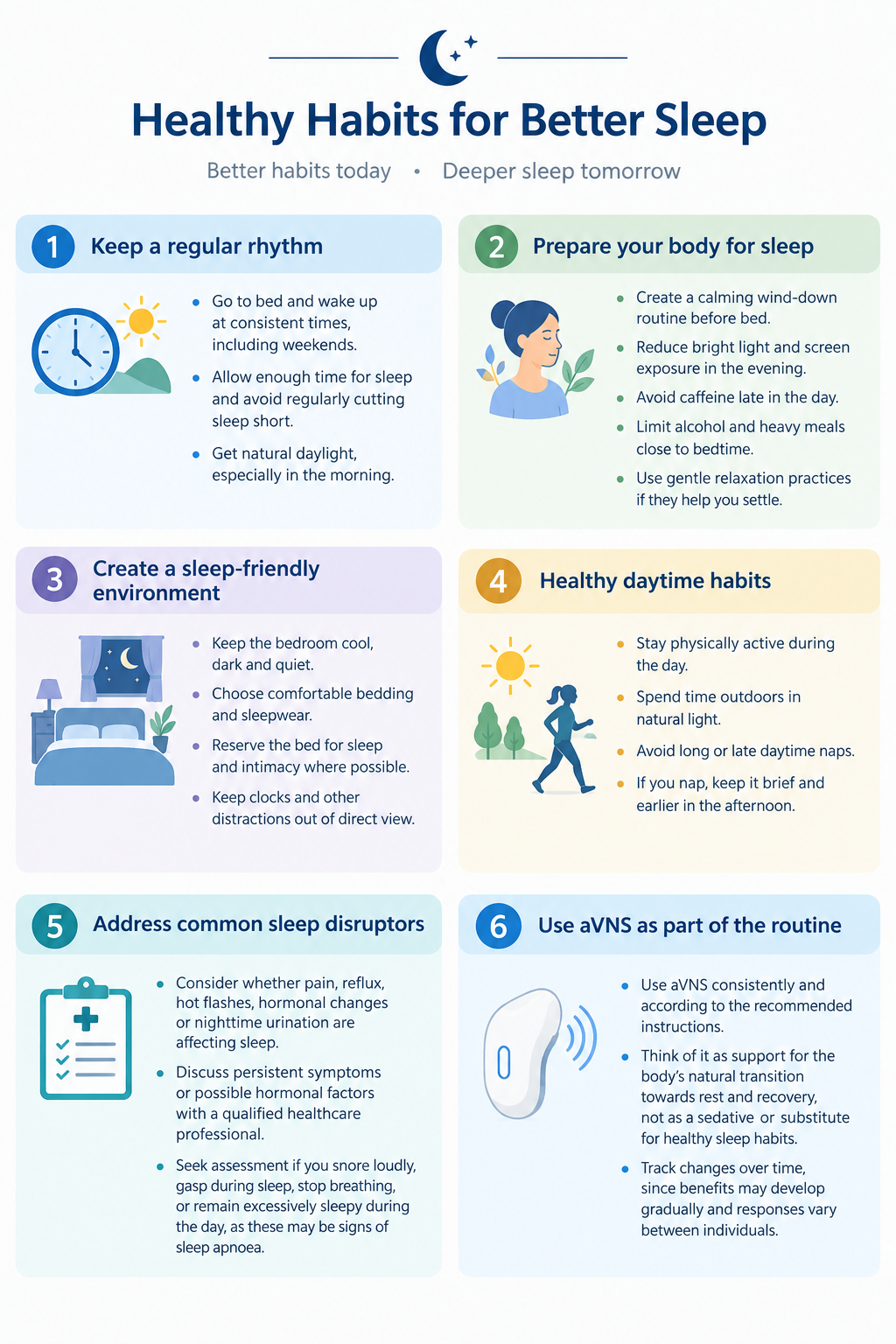
For someone struggling with persistent poor-quality or unrefreshing sleep, the research provides genuine reason for optimism. Sleep is one of the areas in which aVNS has progressed beyond biological theory: improvements have been demonstrated clinically and supported by objective measurements of sleep and nervous-system function.
Autonomic Health
Helping the body move between activation, regulation and recovery
The autonomic nervous system is one of the body’s most important regulatory systems. It works continuously in the background, making thousands of small adjustments that help keep us stable, responsive and able to recover as circumstances change.
It helps regulate heart rate, blood pressure, circulation, breathing, digestion, body temperature, sleep, energy use and our response to physical and emotional stress. It also communicates closely with the immune, hormonal and metabolic systems.
Good autonomic health is therefore about much more than having a normal heart rate or blood pressure. It reflects the body’s ability to respond appropriately when something changes—and then return effectively towards a balanced, restorative state when the challenge has passed.
The vagus nerve plays a central role in this process. It is one of the body’s major communication pathways between the brain and internal organs, carrying information in both directions and helping coordinate functions involving the heart, lungs, digestive system, immune system and other organs.
Sympathetic overdrive and modern life
The autonomic nervous system continually adjusts the balance between different physiological states.
The sympathetic nervous system helps support alertness, activity and rapid responses to challenge. The parasympathetic nervous system, in which the vagus nerve plays an important role, supports functions associated with rest, digestion, recovery and regulation.
Both are essential. Short periods of increased sympathetic activity are completely normal—and often useful. The problem can arise when the body has difficulty moving out of a prolonged state of activation once the immediate need has passed.
This may be particularly relevant to modern life. Ongoing psychological pressure, constant stimulation, disrupted or inadequate sleep, limited recovery time, illness and chronic pain can repeatedly call upon the body’s stress-response systems. For some people, the result may be a body that increasingly behaves as though it needs to remain at an high level alertness and prepared for the next challenge.
This is sometimes described as sympathetic overdrive or excessive sympathetic activation.
Someone experiencing this pattern may notice:
difficulty relaxing or feeling persistently “switched on”
disturbed or unrefreshing sleep
fatigue despite feeling physiologically activated
digestive problems
increased sensitivity to pain
changes in heart rate or awareness of the heart beating
difficulty concentrating
reduced resilience to physical or emotional stress
Importantly, the goal is not to suppress the sympathetic nervous system. We need sympathetic activation for exercise, concentration, responding to challenges and many other normal activities.
What matters is flexibility—the ability to increase activation when it is needed and then transition effectively towards regulation and recovery when it is no longer required.
When autonomic regulation is struggling
Autonomic problems do not always present simply as sympathetic overdrive. When regulation becomes disrupted, the effects can appear in several seemingly unrelated parts of the body.
This may lead to heart-rate fluctuations, dizziness or postural symptoms, fatigue, poor exercise tolerance, temperature changes including hot flashes, digestive problems, disturbed sleep, or an exaggerated or prolonged response to stress.
For some people, the most noticeable feature is that the body seems to overreact to relatively small challenges—or takes much longer than expected to recover afterwards.
This may explain why impaired autonomic regulation can have such a substantial effect on everyday wellbeing. It can influence how someone feels when standing, exercising, eating, sleeping, dealing with stress—or simply getting through a normal day.
Where does aVNS fit?
This is one of the most natural applications of aVNS because the treatment directly stimulates a sensory pathway of the vagus nerve—a major component of the body’s brain–body regulatory network.
Clinical research has provided objective evidence that aVNS can influence autonomic function. Studies have reported changes in measures including heart-rate variability, vagal activity, sympathetic activity and cardiovascular responses, while research in specific autonomic disorders such as POTS has demonstrated measurable changes in the body’s response to standing.
This is important because the aim of aVNS is not simply to make someone feel calmer.
Nor does aVNS arbitrarily “switch off” the sympathetic nervous system or force the body into a state of relaxation. Rather, stimulation provides a signal into neural pathways involved in regulation, with the aim of helping the nervous system become more flexible in moving between activation, regulation and recovery at appropriate times.
That distinction may be particularly important in the context of modern life. If repeated stressors are continually pushing the body towards activation, a therapy that targets one of the body’s own regulatory pathways becomes especially valuable.
For someone experiencing symptoms associated with poor autonomic regulation—or simply finding that their body seems persistently “switched on”—the emerging research provides genuine reason for interest in aVNS.
Rather than treating activation and recovery as positive or negative states, the broader goal is to support the body’s ability to move appropriately between them: to respond when necessary, regulate effectively, and recover when the challenge has passed.
Heart-Rate Variability (HRV)
There has been an explosion of interest in heart-rate variability, or HRV, in recent years. Once mainly measured in research laboratories and specialist clinics, HRV is now routinely tracked by smartwatches, fitness trackers and smart rings.
HRV measures the tiny differences in timing from one heartbeat to the next. A healthy heart does not beat like a perfectly regular metronome. Instead, the interval between beats continually changes as the autonomic nervous system responds to breathing, activity, stress, rest and recovery.
In general, a higher resting HRV relative to your own normal range is associated with greater autonomic flexibility and recovery, while a persistent fall can accompany poor sleep, illness, psychological stress, heavy exercise or inadequate recovery.
There is no single “perfect” HRV. HRV also tends to decrease with age, and values vary considerably between individuals. Your own pattern over time is generally much more informative than comparing your number with someone else’s.
Why is HRV particularly interesting with aVNS?
The vagus nerve plays an important role in the beat-to-beat regulation of the heart. HRV therefore gives researchers something especially useful: an objective way of observing whether vagal stimulation is actually changing autonomic regulation.
Studies have reported improvements in HRV following aVNS, although results vary depending on the population, stimulation method and particular HRV measurement being examined. This supports the broader evidence that aVNS can influence autonomic function.
For Luminnova InnateSignal™, HRV can therefore provide an additional way of following response alongside changes that may be more noticeable in everyday life, such as:
better sleep · improved energy · greater stress tolerance · better exercise recovery · fewer autonomic symptoms · an improved general sense of wellbeing
The goal, however, is not to chase the highest possible HRV number.
HRV represents only one window into autonomic health. The more meaningful goal is improved autonomic flexibility and resilience—the ability to respond appropriately when the body is challenged and then return efficiently towards rest, recovery and balance.
Postural Orthostatic Tachycardia Syndrome (POTS)
POTS is a disorder of autonomic regulation in which the body has difficulty making the adjustments needed when a person moves from lying or sitting to standing.
Heart rate may rise excessively, and this can be accompanied by dizziness, palpitations, weakness, fatigue, brain fog, exercise intolerance and sometimes near-fainting.
POTS can have several contributing causes and does not behave identically in everyone. However, excessive sympathetic activity and inadequate parasympathetic or vagal regulation appear to be important in many patients.
This makes POTS an especially promising for exploring aVNS.
What has the research shown?
The early clinical findings are encouraging—and importantly, researchers have measured objective changes in autonomic function, not just changes in how patients said they felt.
In a randomized clinical trial, people with POTS used non-invasive vagus nerve stimulation every day for two months.
At the end of treatment, the excessive increase in heart rate that occurred when participants stood up was substantially smaller in those receiving active stimulation—approximately 18 beats per minute compared with 32 beats per minute in the comparison group.
In practical terms, their cardiovascular system was responding more normally to the challenge of standing.
But this was not the only change.
Researchers also found improvements in heart-rate variability (HRV), an objective measure of cardiac autonomic regulation, together with lower levels of inflammatory cytokines.
Particularly interesting was a reduction in two types of abnormal autoantibodies. These are antibodies that mistakenly target the body’s own proteins—in this case, receptors involved in regulating heart rate and blood-vessel function. Such antibodies may contribute to the abnormal cardiovascular regulation seen in some people with POTS.
Taken together, these findings suggest that aVNS may be influencing both the autonomic and immune processes that contribute to POTS—not simply reducing its symptoms.
This may also have wider relevance because POTS and other forms of autonomic dysfunction are commonly seen in Long COVID, other post-viral conditions and after vaccination. Long COVID research has provided further evidence that aVNS can produce meaningful changes in autonomic regulation, including HRV, while COVID-related studies have separately demonstrated effects on inflammatory and immune signaling.
Why is that important?
POTS is increasingly understood as more than simply “a fast heart rate when standing.”
In some patients, inflammation and abnormal antibodies may interfere with the receptors the body uses to regulate heart rate, blood pressure and circulation.
The fact that aVNS was associated not only with a smaller heart-rate rise but also with changes in these biological markers raises an intriguing possibility: vagal stimulation may be influencing some of the processes contributing to autonomic dysfunction rather than simply suppressing one of its symptoms.
Research in hyperadrenergic POTS, where excessive sympathetic nervous-system activity is particularly prominent, has added to this picture, with findings involving sympathetic activity, vagal regulation and cardiovascular responses to upright posture.
What might this mean for someone with POTS?
The research is still relatively early, and POTS is a complex condition with different underlying contributors in different people.
Nevertheless, these are unusually interesting findings because improvements have appeared at several levels—heart-rate control, autonomic regulation, inflammatory activity and abnormal antibodies.
For someone living with POTS, this provides a genuine reason for optimism that supporting vagal regulation may be a useful approach to improving the underlying autonomic imbalance, rather than focusing only on individual symptoms such as palpitations or dizziness.
For this reason, Luminnova InnateSignal™ may be considered as a supportive trial alongside established POTS measures, with response assessed not only by symptoms but, where appropriate, by changes in heart rate and other measures of autonomic function.
Pain
Pain is not simply a signal coming from an injured or inflamed part of the body. How strongly pain is experienced is influenced by a complex network involving the brain, spinal cord, peripheral nerves, immune system and autonomic nervous system.
The vagus nerve interacts with several of these systems. Research suggests that aVNS may influence the way pain signals are processed, strengthen some of the body’s natural pain-control pathways, reduce inflammatory signalling and help regulate the autonomic disturbances that frequently accompany persistent pain.
This has led researchers to investigate aVNS across a surprisingly wide range of painful conditions. The results are encouraging enough that aVNS may be worth considering as an additional approach when conventional measures have not provided sufficient relief, or when someone would like to explore non-drug strategies that may help reduce their reliance on pain medication.
Migraine and Other Headache Disorders
Migraine has been extensively investigated, with a growing body of clinical research examining the effects of non-invasive vagus nerve stimulation on both acute migraine attacks and migraine prevention. The evidence for migraine is considerably stronger than for other headache disorders, and further information is provided in the dedicated Migraine section below.
Vagus nerve stimulation has also been investigated in other types of headache, particularly cluster headache, one of the most severe primary headache disorders. Clinical trials of non-invasive vagus nerve stimulation have reported both relief during individual attacks and reductions in attack frequency when stimulation is used preventively.
The strongest cluster-headache studies to date have used stimulation over the vagus nerve in the neck rather than auricular stimulation. These findings are nevertheless important because they provide additional clinical evidence that modulating vagal pathways can influence the neurological systems involved in severe headache pain.
This distinction will become increasingly relevant as the InnateSignal platform expands to include a dedicated cervical stimulation program. The cervical program will be designed to build on the clinical research involving neck-based vagus nerve stimulation, while the current auricular program remains focused on stimulation delivered through the ear.
Researchers are also extending this work specifically to auricular vagus nerve stimulation. A randomized clinical trial involving children and adolescents is investigating aVNS for several primary headache disorders, including migraine, tension-type headache and cluster headache, examining both immediate pain relief and prevention of future headache attacks.
Taken together with the considerably stronger evidence in migraine, these findings suggest that the potential influence of vagal stimulation on headache is unlikely to be limited to a single type of headache. The emerging evidence supports continued investigation of both auricular and cervical approaches as complementary, non-drug strategies for headache and pain regulation.
Lower-back pain
Clinical studies have reported reductions in pain and disability in people with chronic lower-back pain. Some participants have also experienced improvements in movement, physical function and their ability to take part in rehabilitation.
Research combining aVNS with a therapeutic home exercise program has also produced encouraging results. In people with chronic low back pain, this combination produced greater improvements in pain, trunk endurance and some measures of muscle strength than conventional clinic-based rehabilitation combined with home exercise. This may have important practical consequences, offering greater independence by making it easier to continue an appropriate therapy program at home after initial evaluation and advice, without relying on repeated clinic-based treatment.
For some people back pain may be a chronic condition causing variable degrees of discomfort and disability. The benefit offered by aVNS may extend beyond pain relief to greater ability to move, exercise, sleep and independently manage symptoms and everyday activities.
Neck and musculoskeletal pain
aVNS has also been investigated for chronic neck and other musculoskeletal pain. Studies suggest that it may reduce pain intensity and improve function in some cases, particularly when persistent pain has become associated with muscle tension, poor sleep, stress or heightened nervous-system sensitivity.
This is important because chronic musculoskeletal pain can involve much more than the original injury. Changes in nervous-system sensitivity and pain processing may continue to amplify symptoms even after the initial tissue problem has improved. By potentially influencing pain processing, autonomic regulation and muscle tension at the same time, aVNS may help interrupt some of the factors that keep pain going.
Fibromyalgia and widespread pain
Fibromyalgia involves altered pain processing as well as disturbances in sleep, fatigue and autonomic regulation—several systems potentially influenced by vagal stimulation. Clinical research has reported improvements in pain, mood and overall fibromyalgia-related impact and functioning.
For people with fibromyalgia, the potential value of aVNS may therefore extend beyond reducing pain alone. If stimulation helps calm excessive pain sensitivity and improve sleep or autonomic regulation, it may also make daily activity, rest and other treatments easier to tolerate. These findings are promising, although larger and longer studies are still needed to establish how consistent and durable the benefits are.
Osteoarthritis and joint pain
aVNS has also been investigated in osteoarthritis, particularly knee osteoarthritis.
aVNS cannot repair worn cartilage or reverse structural joint damage. However, structural changes and the amount of pain someone experiences do not always correspond. The degree of inflammation present and individual nervous system response play an important part in determining how painful an arthritic joint actually feels.
Studies have reported improvements in joint pain and physical function in some participants. Researchers have also examined whether vagal stimulation can strengthen the body’s own mechanisms for suppressing pain and influence inflammatory activity.
Inflammatory and autoimmune pain
The vagus nerve forms an important communication link between the nervous system and immune system, making painful inflammatory disorders another promising area for aVNS.
Vagus nerve stimulation has been investigated in conditions including rheumatoid arthritis and systemic lupus erythematosus, with studies reporting improvements in symptoms such as pain, stiffness and fatigue in some participants. Importantly, some research has also demonstrated measurable changes in inflammatory activity.
This distinction matters.
If someone with an inflammatory condition feels less pain, that is valuable in itself. But changes in inflammatory markers indicate that vagal stimulation may sometimes influence the biological processes contributing to the pain as well as the perception of pain itself.
For the patient, the practical goals remain straightforward: less pain and stiffness, easier movement, improved energy and better day-to-day function.
Neuropathic pain
Neuropathic pain develops when nerve signalling itself becomes abnormal. It may feel very different from ordinary aching pain and can produce burning, shooting or electric sensations, tingling, hypersensitivity or pain from touch that would normally be harmless.
aVNS has been investigated clinically for peripheral neuropathic pain, including chemotherapy-related neuropathy, while extensive preclinical research has examined diabetic and other forms of neuropathic pain. These studies have reported reductions in pain sensitivity and changes in the abnormal nerve and inflammatory signalling associated with neuropathic pain.
Symptomatic responses in people with post-viral and post-vaccine small-fiber neuropathy have also been documented, including reductions in burning pain, tingling, electric sensations and sensory hypersensitivity in some individuals. This remains an emerging area requiring further clinical research, but the reported responses suggest that aVNS may potentially help reduce both the intensity of neuropathic symptoms and the nervous-system overactivity that helps maintain them.
This is encouraging because neuropathic pain can be particularly difficult to treat and medications are not always effective or well tolerated.
The aim with aVNS is not simply to numb the affected area. The possibility is that stimulation may help reduce the excessive nervous-system activity and sensitisation that contribute to the pain itself.
This remains a developing clinical area, but it provides a reasonable basis for exploring aVNS in people with persistent neuropathic symptoms, particularly where conventional approaches have provided incomplete relief.
Temporomandibular Disorder (TMD)
TMD can cause persistent jaw, facial and sometimes head or neck pain, making eating, talking and even opening the mouth uncomfortable.
The problem may involve the jaw joint, surrounding muscles and pain-processing systems, while stress, poor sleep and increased muscle tension can further amplify symptoms.
Early clinical research using aVNS has produced encouraging signals involving TMD-related pain, jaw discomfort and movement, with some studies also reporting improvements in function and associated symptoms such as sleep disturbance, anxiety and psychological distress. The initial randomized study was small, however, and these differences require confirmation in larger trials.
The broader psychological response may be especially useful in TMD because pain, stress, sleep and muscle tension frequently reinforce one another.
For someone with persistent TMD, improvement may therefore mean more than simply a lower pain score. It could mean easier chewing and speaking, less jaw tension, better sleep and less disruption of normal daily life.
Abdominal and visceral pain
Pain arising from the internal organs behaves differently from pain coming from the skin or muscles. In some gastrointestinal conditions, the gut can become unusually sensitive, so that normal stretching, movement or digestive activity is experienced as uncomfortable or painful.
Because the vagus nerve has extensive connections with the digestive system, aVNS offers a particularly promising way of influencing this gut–brain communication.
Clinical research has investigated aVNS for gastrointestinal disorders including irritable bowel syndrome, with findings suggesting improvements in abdominal pain, bloating and digestive symptoms in some participants.
Researchers have also demonstrated changes in visceral sensitivity and the way the nervous system responds to signals coming from the gut.
For someone living with recurrent abdominal pain, this could translate into more comfortable eating, less fear of triggering symptoms and greater confidence in working, travelling, exercising and participating in normal activities away from home.
The wider gastrointestinal evidence is discussed further in the Digestive Health section.
Menstrual and pelvic pain
aVNS is also being explored for painful menstrual periods and chronic pelvic pain, with encouraging early findings.
Research has reported reductions in menstrual pain, while emerging work in conditions such as endometriosis and adenomyosis has added evidence involving pain, autonomic regulation and inflammatory pathways.
This is particularly relevant because pelvic pain can become amplified by several interacting processes—inflammation, abnormal nerve sensitivity, muscle responses and autonomic dysregulation.
Preclinical endometriosis research has gone even further, reporting effects on inflammatory signalling and disease-related biological changes rather than pain alone. These findings suggest that vagal stimulation could potentially impact the underlying disease process, although this has not yet been established in women.
For someone experiencing disabling menstrual or pelvic pain, however, the immediate goal is much simpler: fewer severely painful days, better sleep and greater ability to work, exercise and participate normally in everyday life.
Women’s health and endometriosis are discussed in greater detail in the Women’s Health section.
Postoperative pain
aVNS has been studied following a variety of surgical procedures. Some studies have reported lower postoperative pain, reduced nausea and reduced requirements for pain medication, although findings have varied between procedures and studies.
The possibility of reducing medication requirements is particularly attractive after surgery, where even a modest reduction in pain or analgesic use may be beneficial. Better pain control may also make it easier to breathe deeply, walk, sleep and participate in physiotherapy, all of which support recovery and reduce the risk of complications.
Why these different types of pain matter
Perhaps one of the most important findings is the wide array of pain types improved by aVNS. Positive findings have not been restricted to one particular type of pain. aVNS has been investigated in musculoskeletal, inflammatory, neuropathic, visceral, pelvic, headache and postoperative pain.
Across these conditions, published findings suggest potential benefits in several areas: lower pain intensity, fewer or less severe attacks, reduced hypersensitivity, less stiffness and muscle tension, improved sleep, better mood and autonomic regulation, improved physical function and, in some disorders, changes in inflammatory activity.
These conditions have very different causes, but many eventually involve overlapping systems responsible for inflammation, pain sensitivity, autonomic regulation and the way the brain processes and controls pain. The ability of vagal stimulation to interact with several of these systems at the same time may explain why aVNS has produced responses across such a diverse range of painful conditions.
Nevertheless research indicates that different pain conditions — for example migraine, widespread body pain, localized musculoskeletal pain, neuropathic or visceral pain — may require different stimulation approaches for optimal response.
For this reason, Luminnova InnateSignal™ does not rely on a single generic “pain” programme. Where possible, programmes are based on stimulation approaches that have produced encouraging results for the particular type of pain being addressed.
This allows aVNS to be explored in a more targeted way while recognising that individual responses will still vary.
Overall, the growing clinical evidence makes pain a promising area for exploring aVNS—particularly for people with persistent or recurrent pain, incomplete relief from existing approaches, or an interest in adding a non-drug strategy that works with the body’s own pain-regulation systems.
Migraine Headaches
Migraine is one of the most extensively investigated areas of vagus nerve stimulation for pain, and the findings provide meaningful reasons for people living with recurrent migraine to consider aVNS.
For someone with migraine, improvement means much more than simply lowering a pain score. Fewer migraine days, shorter or less disabling attacks, less reliance on rescue medication and being able to make plans without constantly anticipating the next attack can make a substantial difference to everyday life.
Clinical studies of vagus nerve stimulation have reported improvements in several of these areas, including:
fewer migraine and headache days
reduced headache intensity
improvement in migraine-related disability
reduced use of acute or rescue medication
improvement during individual migraine attacks
and, in some studies, improvement in associated symptoms such as nausea and sensitivity to light and sound.
Importantly, the evidence is no longer based on isolated small studies. Reviews combining the results of randomized clinical trials have found that non-invasive vagus nerve stimulation can reduce headache burden, and analyses specifically examining auricular vagus nerve stimulation have found reductions in migraine days and headache intensity.
What does the evidence show regarding migraine frequency?
There is encouraging evidence that regular vagus nerve stimulation may reduce the tendency for migraines to occur.
In one randomized study involving people with chronic migraine, participants using low-frequency auricular vagus nerve stimulation experienced an average reduction of approximately 7 headache days per month after 12 weeks, compared with approximately 3 days with the alternative stimulation frequency. Furthermore**, almost a third of participants experienced at least a 50% reduction in headache days**. Measures of migraine-related disability also improved.
This is particularly relevant for people whose lives are repeatedly interrupted by migraine. Even a partial reduction in frequency can potentially mean several additional migraine-free days each month.
More recent analyses combining multiple clinical trials have reinforced the overall picture, reporting reductions in monthly headache days, headache intensity and use of acute migraine medication with non-invasive vagus nerve stimulation.
What about using vagus nerve stimulation during a migraine?
Vagus nerve stimulation has also been studied as a treatment used during an individual migraine attack.
Some people experience improvement relatively quickly, including reductions in pain and associated migraine symptoms. Larger randomized studies of non-invasive vagus nerve stimulation have demonstrated increased rates of early pain relief or freedom from pain compared with comparison stimulation.
The response does not necessarily persist after a single stimulation session in everyone. In some studies, symptoms returned after initial improvement, suggesting that repeat stimulation during an attack may sometimes be useful.
This possibility of using vagal stimulation in two different ways — regularly to help reduce migraine frequency and during an attack to potentially reduce its immediate burden — is one of the reasons migraine is such an important application of vagus nerve stimulation.
What about children and teenagers?
Migraine can begin surprisingly early in life, so parents may understandably wonder whether vagus nerve stimulation has been studied in younger people.
It has.
Non-invasive vagus nerve stimulation has been evaluated for acute migraine treatment in adolescents, with encouraging results and no device-related adverse events reported in one preliminary study. Almost half of the treated attacks were successfully managed without the need for rescue medication.
There is also now published experience specifically with auricular vagus nerve stimulation in a child with difficult-to-treat chronic migraine. An 8-year-old boy with migraine with aura had experienced two to three attacks each week, often lasting around 24 hours. During a structured taVNS programme, headache duration and frequency fell substantially, the aura resolved, medication use decreased and improvement was maintained during follow-up. No adverse events were reported.
This is only an individual case and cannot establish effectiveness in children by itself, but it is reassuring that auricular stimulation has been used successfully and was well tolerated in a young child. A randomized clinical trial specifically studying taVNS for prevention and treatment of primary headache in children and adolescents is also underway.
Why might vagus nerve stimulation influence migraine?
Migraine is not simply a headache. It involves altered activity across brainstem and higher brain networks involved in pain processing, sensory sensitivity, autonomic regulation and the development and maintenance of a migraine attack.
Vagal stimulation provides a way of influencing these networks without medication.
Rather than simply attempting to numb pain, stimulation of vagal pathways appears capable of modifying neural systems involved in how migraine begins, how pain is processed and how the nervous system responds during an attack.
For someone whose migraines remain disruptive despite existing strategies — or who would like to add a non-drug neuromodulation option — the possibility of reducing both the frequency and burden of attacks provides a meaningful reason to explore aVNS.
Luminnova InnateSignal™ includes migraine programmes based on auricular stimulation approaches that have produced encouraging findings in published clinical research.
Acute Inflammation & Acute Infection
Inflammation is one of the body’s most important protective responses. It helps us fight infection, respond to injury and repair damaged tissue.
The problem arises when inflammation becomes excessive, poorly regulated or remains active for longer than it is needed. Persistent inflammatory activity can contribute to pain, fatigue, tissue damage and organ dysfunction and plays an important role in many chronic inflammatory and autoimmune conditions.
The vagus nerve is part of one of the body’s natural systems for keeping this response under control.
The nervous system has a clear role in regulating inflammation
The brain, autonomic nervous system and immune system were once thought of as largely separate systems. We now know that they are in constant communication.
The vagus nerve forms an important part of this communication network. Through a process sometimes called the inflammatory reflex, the nervous system can detect inflammatory activity within the body and participate in regulating the strength and duration of the immune response.
Vagus nerve stimulation gives us a way of engaging this natural regulatory system.
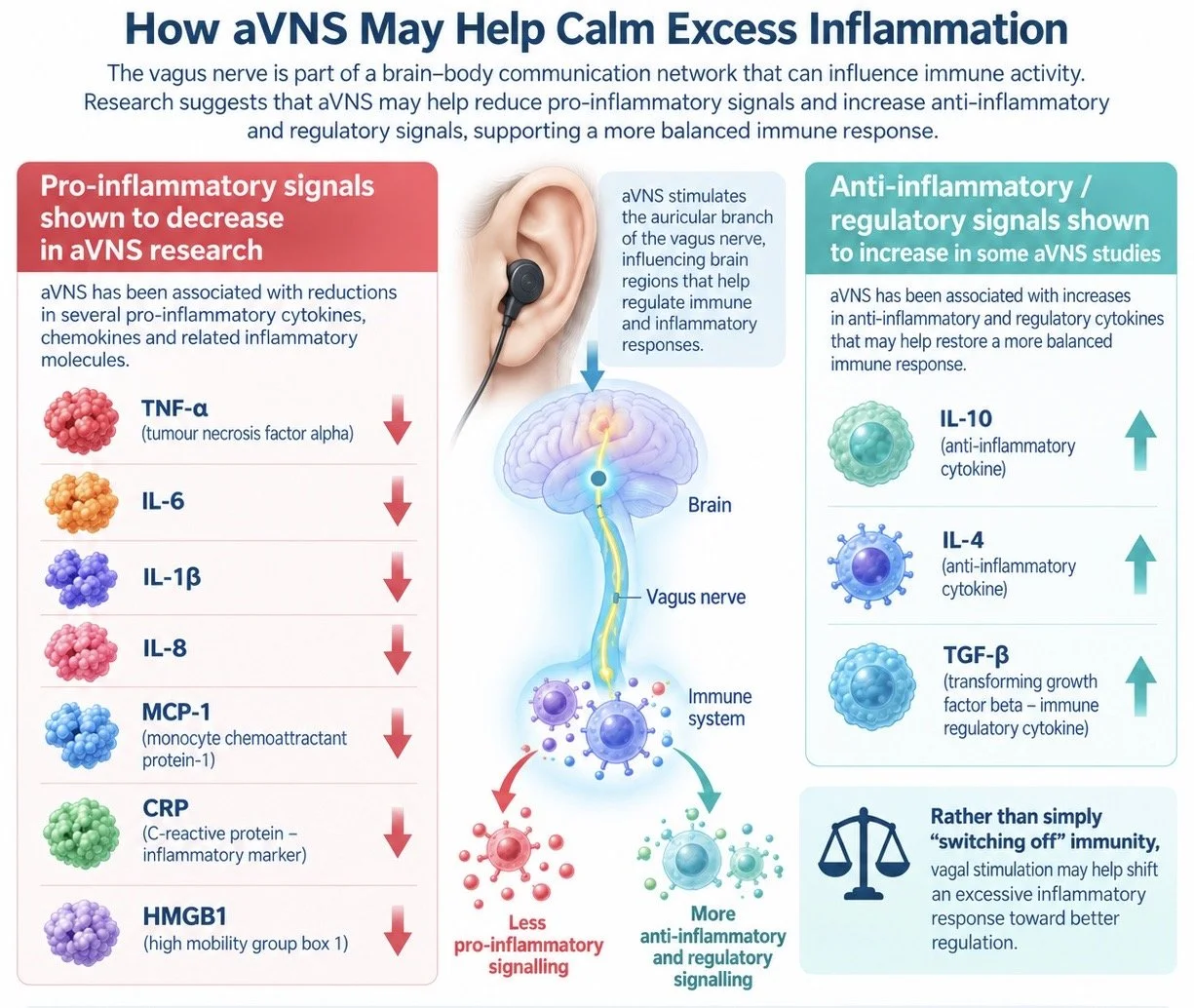
Researchers have demonstrated changes in important inflammatory signals following vagal stimulation, including CRP, TNF-α, IL-6, IL-1β and other inflammatory mediators. These objective findings are particularly valuable because they show that the effects of vagal stimulation can extend beyond people simply feeling better—measurable changes in inflammatory biology have occurred.
The aim is not to indiscriminately “boost” or suppress immunity. It is to support the body’s ability to regulate inflammation appropriately and return towards balance once an inflammatory response has served its purpose.
This is one of the important goals of Luminnova InnateSignal™.
Acute Inflammatory Conditions
Acute illness sometimes produces an inflammatory response so powerful that the body’s own response begins contributing to symptoms, tissue injury and organ dysfunction.
Clinical research suggests that aVNS may help the body regulate this excessive inflammatory response, and some of the findings have been remarkably rapid.
Acute pancreatitis
A 2026 multicentre randomized trial studied 60 people hospitalized with acute pancreatitis.
After only three days, CRP—an important blood marker of inflammation—had fallen by approximately 32 mg/L in patients receiving aVNS, while it had increased by approximately 13 mg/L in the comparison group.
Even more importantly for patients, the laboratory improvement was accompanied by faster clinical recovery.
By day three, approximately 50% of patients receiving aVNS had achieved substantial symptom improvement, compared with only 13% of those receiving standard treatment alone.
This is a good example of why the inflammatory findings matter. The goal is not simply to produce a better laboratory result—the hope is that better regulation of inflammation translates into feeling better and recovering more quickly.
Similar findings in other acute illnesses
Positive findings have now appeared in several very different clinical settings.
In acute ischemic stroke, aVNS altered the pattern of IL-6 and reduced several other inflammatory signals, including IL-1β and IL-17α.
In a 2026 randomized trial involving 120 people undergoing thyroid surgery, patients receiving aVNS had lower postoperative IL-6 and TNF-α, but they also experienced less pain and nausea, shorter hospital stays and better overall recovery.
Another 2026 randomized study involving older surgical patients found significantly lower IL-6 following aVNS. Postoperative cognitive problems occurred in approximately 10% of patients receiving aVNS compared with 33% in the comparison group.
And in critically ill patients with sepsis and acute gastrointestinal injury, aVNS was associated with better movement of the stomach and a greater ability to reach nutritional targets, alongside changes in inflammatory and intestinal-barrier markers.
The repeated combination of measurable biological changes and better clinical outcomes is particularly encouraging.
Across 27 randomized trials involving more than 1,100 participants, a systematic review also found significant overall effects of auricular stimulation on several inflammatory markers.
Taken together, the evidence increasingly supports something important: stimulating the vagus nerve can measurably influence inflammatory regulation in humans.
Acute COVID-19
COVID-19 provided a particularly clear demonstration of how an immune response intended to protect us can sometimes become part of the problem.
In severe infection, excessive release of inflammatory mediators can contribute to tissue injury and deterioration. This made regulation of the inflammatory response an obvious potential target for vagus nerve stimulation.
And there is direct human evidence.
In a randomized hospital-based study of acute COVID-19, aVNS was associated with an approximately 38% reduction in IL-6 and 24% reduction in CRP within seven days compared with comparison stimulation.
These are substantial changes in two important markers of systemic inflammation.
The significance extends beyond COVID-19 itself. Together with findings from pancreatitis, surgery, stroke and other acute illnesses, the study provides further evidence that aVNS can engage inflammatory regulatory pathways even when the body is experiencing significant acute inflammation.
Luminnova recommends treatment at an earlier stage of infection to reduce the likelihood of progression to a severe state or persistent symptoms after infection. While randomized control trials have not been published in early CoVID-19 there are promising case reports supporting this rationale.
Naturally for acute CoVID-19 and other severe acute inflammatory conditions, aVNS should be considered as an additional supportive measure along with appropriate medical care - not the primary treatment.
Long COVID & Post-Viral Recovery
For many people, recovery from an infection does not end when the acute illness has passed.
Following COVID-19 and other viral illnesses, some people continue to experience fatigue, brain fog, poor sleep, dizziness, rapid heart rate, exercise intolerance and a persistent feeling that the body has simply not returned to normal.
For some, these symptoms can profoundly affect work, family life, exercise and normal daily activity.
Increasing evidence suggests that persistent inflammatory activity and disruption of autonomic regulation may both contribute to prolonged recovery.
This makes aVNS particularly promising because it has the potential to influence both sides of this problem.
Rather than directly attacking a virus, the goal is to help the body regain healthier immune and autonomic regulation after infection.
What have people with Long COVID experienced?
The early clinical findings are encouraging.
In one study, people with Long COVID received vagus nerve stimulation once weekly for eight weeks. Their average autonomic symptom score fell dramatically—from approximately 34 to 14.
The improvements were not confined to questionnaires. Objective cognitive testing demonstrated a significant improvement in attention and executive function, while measures of psychological stress also improved. No adverse events were reported.
An early randomized pilot study also reported an encouraging signal. During the initial two-week blinded phase, the proportion of nine monitored Long-COVID symptoms—including fatigue, brain fog, headache, dizziness and disturbances of smell or taste—fell from approximately 46% to 31% in the active-treatment group, while there was no corresponding improvement in the comparison group.
For someone struggling with prolonged post-viral symptoms, these findings offer genuine reason for optimism. They suggest that supporting vagal regulation may help the body move away from a prolonged state of autonomic and inflammatory disruption and towards more normal recovery.
For this reason, Luminnova InnateSignal™ includes dedicated Long COVID and post-viral recovery programs.
Chronic Inflammatory & Autoimmune Conditions
The same communication between the nervous and immune systems may also be relevant when inflammation becomes chronic.
Vagus nerve stimulation has now been explored across conditions including rheumatoid arthritis, systemic lupus erythematosus, systemic sclerosis, inflammatory bowel disease, multiple sclerosis, psoriasis, atopic dermatitis and vitiligo.
The evidence varies considerably between conditions, but several studies have produced findings that are particularly encouraging for patients.
Systemic Lupus Erythematosus (SLE)
One of the most striking features of the early lupus research is how little stimulation was required to produce measurable clinical improvement.
In a small randomized, double-blind study, people with SLE received only five minutes of aVNS each day for four consecutive days.
Despite this very short treatment course, active stimulation produced significant improvements in pain, fatigue, joint findings and both patient and physician assessments of disease activity.
Participants receiving active stimulation were reported to be approximately 25 times more likely to achieve a clinically meaningful reduction in pain than those receiving comparison stimulation.
Importantly, improvement was still detectable on day 12, several days after the stimulation course had finished.
This echoes the response observed elsewhere in vagus nerve stimulation research: the biological response may sometimes continue after an individual stimulation session—or even a short treatment course—has ended.
Systemic Sclerosis
Early systemic sclerosis research has produced a similarly encouraging combination of symptom improvement and measurable biological change.
In a small randomized clinical study, pain decreased by approximately 28% with aVNS compared with 8% during the control treatment.
At the same time, IL-6 fell by a median of approximately 17% following aVNS, while it increased during the control condition.
That combination matters.
Systemic sclerosis can cause substantial pain and disability, while IL-6 is involved in inflammatory and fibrotic processes associated with the disease. Seeing pain improve while an important inflammatory signal moved in the same favourable direction provides objective support that the effect may extend beyond altered pain perception. This is especially important because IL-6 has been implicated as a key driver of the sometimes disfiguring and debilitating scarring which can occur with systemic sclerosis.
Rheumatoid Arthritis
Rheumatoid arthritis provides some of the strongest human evidence that electrically stimulating the vagus nerve can alter inflammatory disease activity.
Early studies using implanted VNS found reductions in TNF-α, one of the major inflammatory signals driving rheumatoid arthritis, accompanied by improvements in joint tenderness, swelling, pain and overall disease activity.
One observation was particularly persuasive.
When stimulation was temporarily stopped, TNF-α and arthritis activity increased again. When stimulation was restarted, they improved again.
That on–off–on response provided unusually direct evidence that the changes were linked to vagus nerve stimulation.
The evidence has since expanded considerably. In a large randomized study involving 242 people with moderate-to-severe rheumatoid arthritis who had not responded to the most advanced prescription therapies, significantly more people receiving implanted VNS achieved meaningful improvement than those receiving comparison treatment.
Improvement continued over longer treatment, with approximately half of treated patients achieving at least a 20% improvement by 6–12 months.
These were particularly difficult-to-treat patients, making the response especially meaningful. The evidence ultimately contributed to FDA approval in 2025 of an implanted vagus nerve stimulation system for certain adults with moderate-to-severe RA who have not responded adequately to advanced medications.
What about stimulation through the ear?
Research specifically using non-invasive aVNS is much earlier, but the first findings are encouraging.
A small 2026 home-based study reported medium-to-large improvements in pain, including overall pain and pain experienced while gripping.
Even within the short two-week treatment period, researchers also detected a reduction in TNF-α.
This is an important objective finding because TNF-α is not simply a laboratory curiosity—it is such an important driver of rheumatoid inflammation that several established RA medications were specifically developed to block it.
The implanted and auricular approaches are not equivalent, and the much stronger RA evidence currently belongs to implanted VNS. Nevertheless, the emerging aVNS findings suggest that non-invasive stimulation through the ear may also be capable of engaging some of the same inflammatory regulatory pathways.
Multiple Sclerosis
Vagus nerve stimulation may potentially be relevant to MS for two different reasons: neurological function and inflammatory regulation.
In a very small early human study using implanted VNS, three people with severe MS experienced improvements in cerebellar tremor and swallowing difficulties. Tremor improvement developed over approximately two months and swallowing improved over approximately three months.
More recent laboratory research has produced another potentially important finding.
In animal models of MS and demyelination, vagus nerve stimulation has been associated with:
less inflammation within the nervous system
reduced activation of inflammatory cells
less disruption of the blood–brain barrier
less myelin damage
and, particularly importantly, greater repair or remyelination of damaged nerve fibres
The possibility of supporting remyelination is especially significant because myelin is the protective covering around nerve fibres that is damaged in MS.
At present, however, most evidence for these effects on myelin repair comes from animal experiments using implanted stimulation. Whether non-invasive stimulation through the ear can reproduce these effects in people remains an important unanswered question.
Skin Health
Psoriasis
Psoriasis is much more than a surface skin condition. It is an immune-mediated inflammatory disease, and the redness, thickening and scaling seen on the skin reflect inflammatory activity occurring within it.
Vagus nerve stimulation has now produced some particularly striking findings in experimental psoriasis.
A biological response after only five minutes
In an animal model of psoriasis, researchers delivered just one five-minute session of implanted vagus nerve stimulation.
Within six hours, inflammatory activity within the affected skin had fallen dramatically:
TNF-α ↓ approximately 63%
IL-6 ↓ approximately 63%
Even more remarkably, the effect was still clearly present 24 hours later:
TNF-α ↓ approximately 69%
IL-6 ↓ approximately 60%
That means inflammatory activity remained substantially reduced a full day after only five minutes of stimulation.
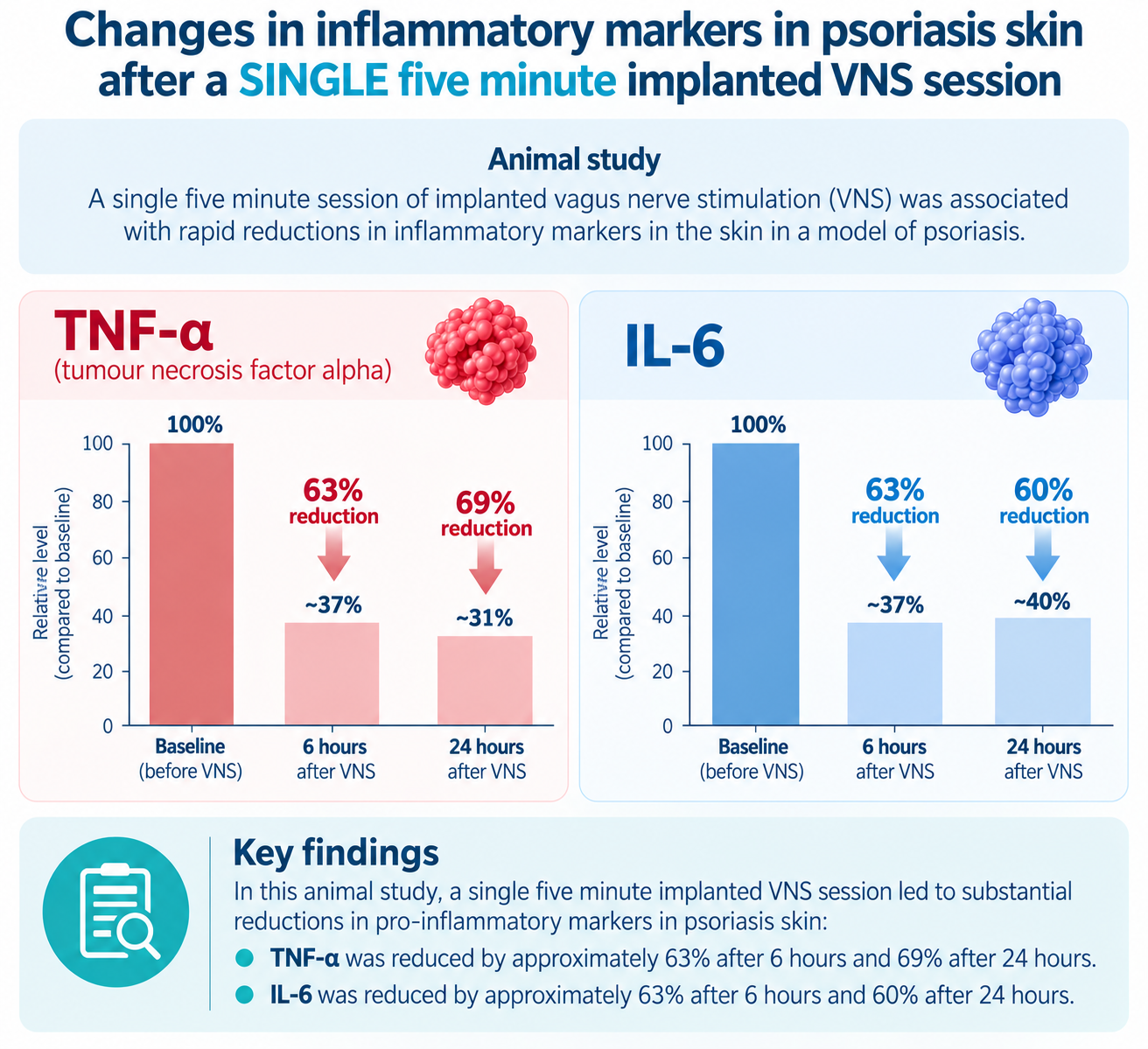
The treatment used direct implanted VNS rather than stimulation through the ear, but the findings demonstrate something important: vagus nerve stimulation can produce a powerful and sustained change in inflammatory signalling within psoriatic skin itself.
What has happened in people with psoriasis?
Based on the remarkable findings from implanted VNS animal studies, researchers have also begun studying non-invasive aVNS in people with plaque psoriasis using 30 minutes of home treatment each day for three months.
Preliminary results reported from seven participants were encouraging: average psoriasis severity scores fell by approximately two-thirds over the three-month treatment period.
In one participant, cumulative daytime salivary cortisol also fell by approximately 40% during treatment.
This finding may be relevant because stress and psoriasis frequently interact. Cortisol is an important part of the body’s normal stress response, but prolonged disturbance of stress regulation can affect immune function and contribute to inflammatory disease.
The combination of substantial changes in inflammatory signalling in laboratory research and early improvement in psoriasis severity in people using aVNS provides a promising foundation for further clinical use and study.
For someone whose psoriasis is persistent or difficult to control, aVNS offers the possibility of a simple home-based approach aimed at supporting both inflammatory and stress-related regulation.
Atopic Eczema
Atopic eczema is driven by a combination of skin-barrier dysfunction and poorly regulated immune activity. This produces the familiar cycle of dryness, inflammation, itching, scratching and recurrent flares.
Recent vagus nerve stimulation research has produced some remarkable objective findings.
A single five-minute treatment
In a 2026 animal study of eczema-like skin inflammation, researchers delivered only one five-minute session of implanted VNS.
Twenty-four hours later:
TNF-α ↓ approximately 68%
IL-6 ↓ approximately 66%
IL-1β ↓ approximately 48%
Once again, a substantial anti-inflammatory response remained clearly detectable a full day after only five minutes of stimulation.
And importantly, non-nvasive aVNS has also worked
A separate 2026 study is particularly relevant to InnateSignal because researchers used non-invasive auricular stimulation through the ear.
Animals with eczema-like inflammation received brief five-minute treatments every two to three days for one or two weeks.
The changes within the skin included:
less abnormal skin thickening
less swelling
fewer inflammatory mast cells
reductions in IL-4, IL-1β and TNF-α
and reduced activity of NF-κB, an important inflammatory pathway.
These were not simply changes in the appearance of the skin. Researchers demonstrated measurable changes within the inflamed tissue itself.
For people living with recurrent eczema, this raises an appealing possibility: supporting the body’s own inflammatory regulation through brief, non-invasive stimulation may eventually help calm inflammation and reduce the tendency towards repeated flares.
Human studies will tell us how much of these impressive laboratory findings can be reproduced in people. Fortunately a large number of animal study findings have later been replicated in human clinical studies so the preliminary animal data gives reason for hope.
Vitiligo
Vitiligo is an immune-mediated condition in which melanocytes—the cells responsible for producing skin pigment—are damaged or lost.
Recent preclinical aVNS research has produced findings that go considerably beyond simply reducing inflammation.
In a mouse model of vitiligo, animals receiving aVNS developed less visible depigmentation and white hair than untreated animals.
After four weeks, researchers also found significantly more melanin around the hair follicles and movement of melanin granules towards the surface of the skin.
Importantly, this was not simply a visual impression. Laboratory analysis demonstrated several biological changes that could potentially support pigment-cell survival and repigmentation:
increased tyrosinase, an enzyme essential for melanin production;
increased superoxide dismutase and catalase, important antioxidant defences;
reduced malondialdehyde, indicating less oxidative damage;
suppression of inflammatory signalling;
better preservation of melanocyte-associated pigment; and
increased melanin around hair follicles on microscopic examination.
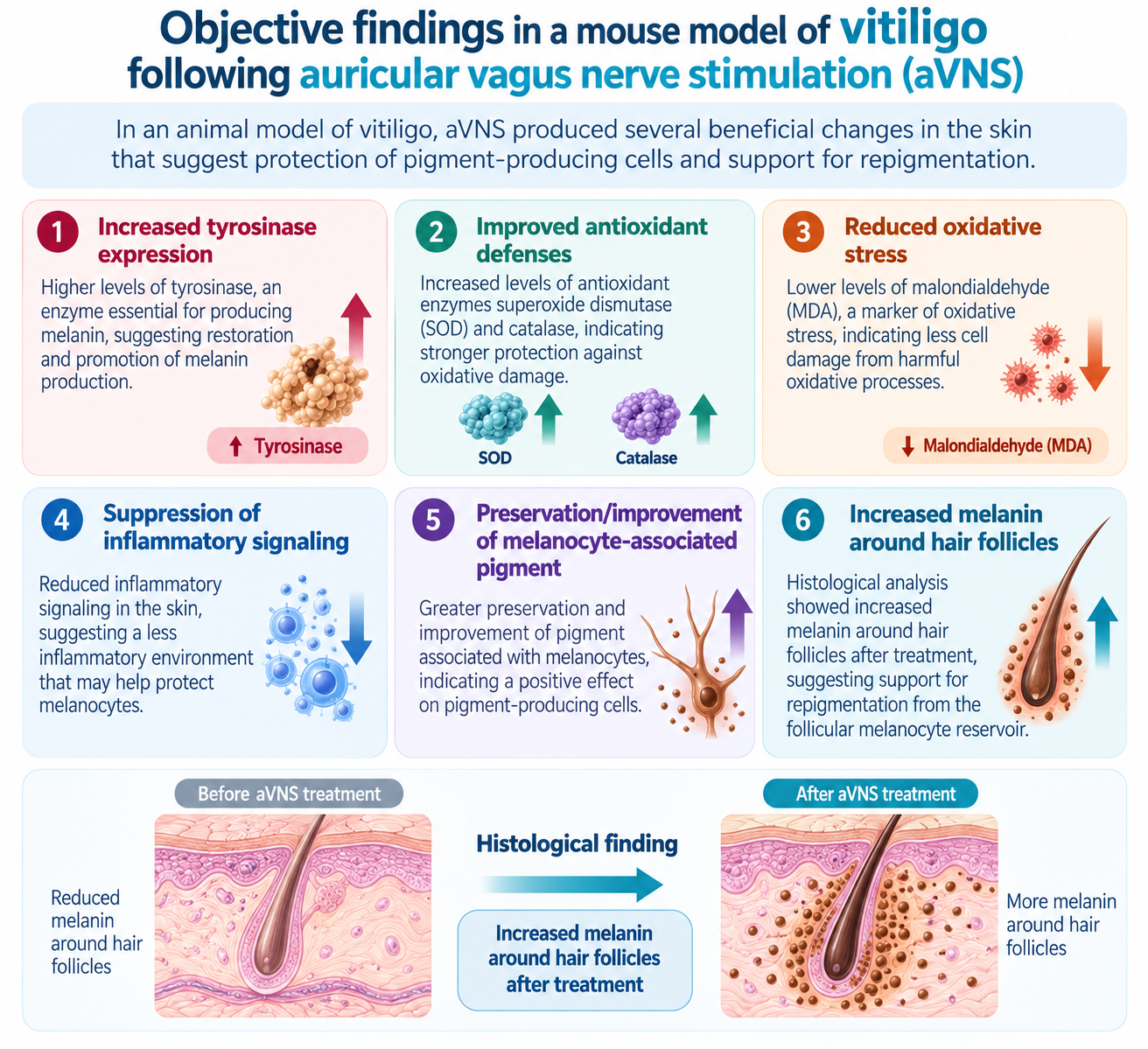
The increase pigment around the hair follicles is notable: the hair follicle contains an important reservoir of melanocytes and melanocyte precursor cells that can contribute to repigmentation.
For someone with vitiligo, the significance is therefore broader than simply “reducing inflammation.” The experimental findings suggest that aVNS may create a more favourable environment for protecting pigment-producing cells, reducing oxidative stress and supporting the biological processes involved in repigmentation.
The evidence is currently preclinical, but the combination of visible improvement and objective changes in melanin, antioxidant defences, inflammatory activity and pigment-cell biology makes these findings particularly encouraging.
Inflammation - Substantial Objective Evidence
Some of the most compelling evidence that aVNS produces real biological effects comes from research into inflammation, where changes have been demonstrated using objective laboratory measurements—not simply symptom reports.
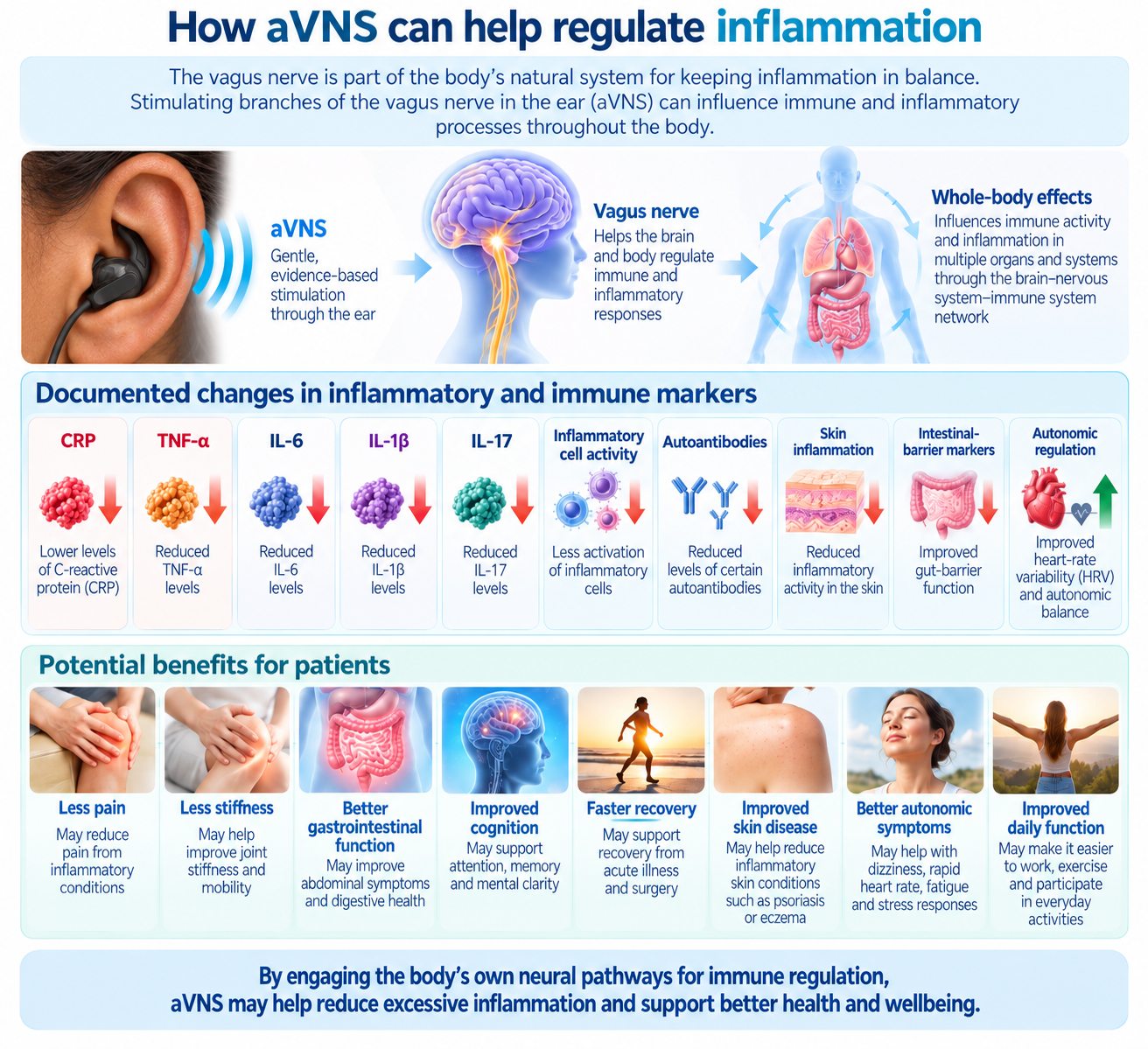
Researchers have documented changes in:
CRP · TNF-α · IL-6 · IL-1β · IL-17 · inflammatory cell activity · autoantibodies · skin inflammation · intestinal-barrier markers · autonomic regulation
And these biological changes have sometimes occurred alongside improvements that patients can actually experience:
less pain · less stiffness · better gastrointestinal function · improved cognition · faster recovery · improved skin disease · better autonomic symptoms · improved daily function
The evidence is much stronger for some conditions than others, and implanted VNS currently has substantially more clinical evidence in some diseases—particularly rheumatoid arthritis—than non-invasive aVNS.
But the overall picture is increasingly compelling.
Vagal stimulation is no longer being studied simply because scientists think the vagus nerve might influence inflammation. Human studies have demonstrated that it can.
The question now is whether the amazing responses documented for implanted VNS will be echoed by non-invasive stimulation through the ear. There is already evidence that aVNS can harness this regulatory system across many different inflammatory conditions. What remains to be established is exactly to what extent.
The Luminnova InnateSignal platform includes successful published protocols across a number of inflammatory conditions.
The evidence is still accumulating but the pace of aVNS research is accelerating in many areas. In the meantime the highly encouraging results already obtained and favorable safety profile may warrant a trial of aVNS to address uncontrolled inflammation.
Cardiovascular Regulation
The heart does not work in isolation. Its rate and rhythm are continually adjusted by the autonomic nervous system in response to activity, posture, breathing, sleep, stress and the changing needs of the body.
The vagus nerve plays an important part in this regulation. It helps slow and stabilize heart rate when appropriate and contributes to the balance between sympathetic stimulation—which prepares the cardiovascular system for activity—and parasympathetic activity, which supports rest, recovery and cardiovascular stability.
This means that supporting healthier vagal regulation could potentially influence several aspects of cardiovascular health at the same time.
Clinical research with aVNS has reported encouraging effects involving:
heart-rate and rhythm regulation
healthier autonomic balance
blood-pressure regulation
reduced excessive sympathetic activity
substantial reductions in atrial fibrillation burden
inflammatory processes associated with cardiovascular disease
and the cardiovascular response to physical or physiological stress
HRV provides one objective way of observing some of these autonomic effects and is discussed in the Autonomic Regulation section. However, the potential cardiovascular effects of aVNS extend well beyond HRV.
Supporting cardiovascular regulation
One of the potential advantages of aVNS is that it does not target only a single cardiovascular measurement.
The autonomic nervous system simultaneously influences heart rate, cardiac electrical activity, blood-vessel tone and blood pressure. It also interacts with inflammatory and metabolic processes that can affect cardiovascular health over time.
Research has demonstrated that stimulating the vagus nerve can shift this regulation—reducing excessive sympathetic activity and strengthening parasympathetic or vagal influence in appropriate settings.
For someone whose cardiovascular symptoms occur alongside stress, poor sleep or autonomic dysfunction, supporting this underlying regulatory system may therefore be particularly relevant.
The goal is not simply to make the heart beat more slowly. It is to help the cardiovascular system become more stable, adaptable and appropriately responsive to changing demands.
Blood-pressure regulation
Blood pressure changes constantly throughout the day. The autonomic nervous system helps make rapid adjustments when we stand, exercise, experience stress or sleep.
Clinical research suggests that aVNS can influence this regulation, with studies reporting improvements in blood pressure in some populations. This may be particularly relevant when elevated or unstable blood pressure occurs alongside excessive sympathetic activity, chronic stress or impaired autonomic regulation.
The potential benefit is therefore not simply “lowering blood pressure.” It is supporting the body’s ability to regulate blood pressure more appropriately as circumstances change.
Blood pressure, however, depends on much more than autonomic activity. The health and flexibility of the blood vessels, kidney function, hormones, metabolic health, body weight, medications and other factors can all contribute. For someone in whom vascular or other factors are dominant, improving vagal regulation alone may produce a smaller change.
Atrial fibrillation: an important clinical finding
AF is an abnormal heart rhythm in which the upper chambers of the heart beat irregularly. In paroxysmal AF, episodes come and go, and fluctuations in autonomic activity can contribute to triggering or maintaining episodes in susceptible people.
Some of the most compelling cardiovascular evidence for aVNS comes from research involving paroxysmal atrial fibrillation (AF).
What has the research found?
In a randomized clinical study, people with paroxysmal AF used low-level electrical stimulation through the ear for one hour each day over six months. Heart rhythm was objectively assessed using approximately two weeks of continuous ECG monitoring at baseline and again at three and six months, allowing researchers to measure AF burden—the proportion of monitored time actually spent in atrial fibrillation.
The results were striking.
At six months, AF burden was 85% lower in those receiving active stimulation than in the comparison group, after taking their starting AF burden into account.
Almost half of those receiving active stimulation achieved a greater than 75% reduction in their AF burden, compared with only 5% of those in the comparison group.
These findings are particularly meaningful because the improvement was objectively recorded by ECG. Researchers were not simply asking people whether they experienced fewer palpitations—they could demonstrate that their hearts were actually spending substantially less time in atrial fibrillation.
WHY MIGHT AVNS AFFECT AN ABNORMAL HEART RHYTHM?
Atrial fibrillation is not purely an electrical problem. The environment surrounding the heart’s electrical system also matters.
Autonomic imbalance, excessive sympathetic activation and inflammation can all influence the likelihood that AF develops or persists.
Vagus nerve stimulation may be particularly valuable because it may influence several of these factors at the same time.
In the AF study, the reduction in abnormal heart rhythm was accompanied by changes in autonomic regulation and inflammation, including an approximately 23% reduction in the inflammatory marker TNF-α compared with the comparison group.
There is another interesting aspect of the findings. Participants used stimulation for only one hour each day, yet the reduction in AF was detected during prolonged ECG monitoring—not simply while the stimulation was taking place.
Together, these findings suggest that repeated aVNS may help create a more stable physiological environment which may lower the frequency and duration of atrial fibrillation.
What does this mean for someone with AF?
For someone with recurrent paroxysmal AF, this has important implications. Fewer episodes and substantially less time spent in AF could mean fewer palpitations, less disruption of sleep, exercise and everyday activities, and a lower overall burden from the condition.
Importantly, reducing the amount of time spent in AF may also have implications beyond symptom relief. Greater AF burden has been associated with a higher risk of important complications, including blood-clot formation, stroke or other thromboembolic events, heart failure and progression toward more persistent forms of AF. Therefore, if a treatment genuinely reduces both the frequency and duration of AF episodes, it could potentially contribute to reducing some of the longer-term risks associated with the condition, although the extent to which reducing AF burden translates into lower complication rates will depend on the individual and remains an area of ongoing research.
For a condition as clinically important as AF, the combination of substantially reduced AF burden, objectively recorded changes in heart rhythm, and accompanying changes in autonomic and inflammatory regulation makes this an especially promising treatment approach in combination with established AF measures.
The wider cardiovascular picture
The cardiovascular research becomes particularly encouraging when considered alongside findings from other areas of aVNS research.
Studies have demonstrated effects on sympathetic and parasympathetic activity, heart-rate regulation, blood-pressure responses and inflammatory signalling. Research in POTS has shown that aVNS can improve the excessive cardiovascular response to standing, while AF studies demonstrate that vagal stimulation can influence an objectively recorded cardiac rhythm disorder.
Together, these findings suggest that the cardiovascular potential of aVNS is broader than simply “improving HRV.”
The emerging picture is that aVNS may help support the regulatory systems that keep heart rate, rhythm, blood pressure and circulation appropriately controlled—and help the cardiovascular system respond more effectively to stress, activity and changing physiological demands.
For people in whom autonomic imbalance, excessive sympathetic activity or inflammation contributes to cardiovascular symptoms, this provides a promising basis for exploring aVNS as an additional way of supporting cardiovascular regulation.
Gastrointestinal Health
The digestive system and brain are in constant two-way communication through what is often called the gut–brain axis. The vagus nerve is one of the most important pathways in this communication network.
Through these connections, the nervous system helps regulate digestion, movement through the gut, sensitivity to intestinal sensations, responses to stress and inflammation.
When this system becomes poorly regulated, the effects can be wide-ranging—from nausea, bloating and constipation to abdominal pain, altered bowel habits and increased sensitivity to normal digestive activity.
This makes aVNS particularly relevant to gastrointestinal health. Rather than targeting only one digestive symptom, stimulation of the vagus nerve has the potential to influence several of the systems that may be contributing to the problem.
Encouraging human research has now been reported in functional dyspepsia, irritable bowel syndrome, constipation and inflammatory bowel disease, with additional evidence relating to gastrointestinal motility and visceral hypersensitivity.
Importantly, many of the positive findings extend beyond symptom improvement. Researchers have measured changes in stomach function, bowel reflexes, vagal activity, intestinal inflammation and even the gut microbiome.
For someone living with persistent gastrointestinal symptoms, this provides a reasonable basis for considering whether aVNS might offer additional support.
Functional Dyspepsia
Functional dyspepsia (FD) can cause upper abdominal discomfort or pain, early fullness while eating, prolonged fullness after meals, bloating, nausea and reduced appetite—often despite routine investigations showing no obvious structural problem.
This can be frustrating because the symptoms are very real even though scans or endoscopy may appear normal.
We now understand that FD frequently involves problems with how the stomach moves and relaxes, how strongly digestive sensations are perceived and how the brain and digestive system communicate.
Because the vagus nerve is involved in all of these functions, FD has become one of the more compelling gastrointestinal applications of aVNS.
How Much Benefit Has Been Seen?
The results from human studies are encouraging.
aVNS has now been investigated in several randomized controlled trials, including a large multicenter study involving 300 people with functional dyspepsia.
After only four weeks, 85.1% of patients receiving aVNS treatment reported adequate relief of their symptoms.
Perhaps even more interestingly, improvement was still apparent three months after the treatment course had finished.
That raises an intriguing possibility: aVNS may do more than temporarily suppress symptoms. The persistence of benefit suggests that treatment may help produce a more lasting improvement in the way the stomach and nervous system regulate one another.
More Than Simply Feeling Better
Some of the strongest reasons for optimism come from what researchers have actually measured inside the digestive system.
aVNS has been shown to improve gastric accommodation—the stomach’s ability to relax and expand appropriately when food enters it.
This matters because poor gastric accommodation can make someone feel uncomfortably full after only a small amount of food.
Researchers have also reported improvements in:
normal electrical activity and movement of the stomach
vagal nervous system activity
abdominal pain and post-meal discomfort
quality of life
associated anxiety and mood symptoms
These objective changes are important. They suggest that people may feel better because the way the stomach and nervous system are functioning is actually changing, rather than because the perception of symptoms is simply being dampened.
Sleep and Digestion May Improve Together
Another study looked specifically at people experiencing both functional dyspepsia and poor sleep.
After four weeks of aVNS, participants experienced improvements in digestive symptoms and sleep quality.
At the same time, researchers measured improvements in gastric accommodation, stomach electrical activity and vagal function.
They also found something unexpected: melatonin levels increased.
This is particularly interesting because sleep, stress, autonomic function and digestion influence one another. Improving regulation in one part of this system may therefore have benefits elsewhere.
What Does the Overall Evidence Tell Us?
These positive findings are not coming from just one study.
A systematic review and meta-analysis combining six randomized controlled trials involving more than 700 patients found that aVNS improved functional dyspepsia symptoms and quality of life, with improvements in anxiety and depression also reported.
Treatment was generally well tolerated, with no serious treatment-related adverse events reported in the included trials.
For someone struggling with persistent functional dyspepsia, the combination of symptom improvement, objective improvements in stomach function, effects on vagal regulation and a favorable risk profile makes aVNS a particularly reasonable non-invasive option to explore.
Irritable Bowel Syndrome (IBS)
IBS can cause a difficult combination of abdominal pain, bloating, constipation, diarrhea or fluctuating bowel habits.
Although the bowel may look structurally normal, its movement, sensitivity and communication with the nervous system can be significantly disturbed.
The vagus nerve is involved in intestinal movement, gut sensitivity, autonomic regulation and inflammation, making aVNS a particularly logical way of trying to improve the underlying gut–brain imbalance.
What Improvements Have People Actually Experienced?
Randomized human studies—particularly in constipation-predominant IBS (IBS-C)—have reported:
less abdominal pain
more frequent spontaneous and complete bowel movements
more normal stool consistency
lower overall IBS symptom severity
better quality of life
improvements in associated anxiety and mood symptoms
For someone living with IBS, these are meaningful outcomes. They include not only feeling less uncomfortable, but also having more normal and predictable bowel function.
Evidence That Bowel Function Is Actually Changing
Researchers have also found objective changes that help explain why symptoms may improve.
aVNS has improved measurements of rectal sensitivity and bowel reflex function, suggesting better regulation of the signals controlling sensation and bowel activity.
Changes in heart-rate variability have also indicated increased vagal activity.
Most interestingly, people showing greater increases in vagal activity tended to have more complete bowel movements and less abdominal pain.
This suggests the activating vagal pathways may actually be contributing to the improvement.
Could aVNS Also Influence the Gut Microbiome?
One of the more unexpected findings has involved the intestinal microbiome.
In a randomized study, aVNS increased Bifidobacterium, a group of bacteria commonly associated with a healthier intestinal environment.
Researchers also found increases in important bacterial products called short-chain fatty acids, including butyrate, acetate and propionate.
These substances help support the intestinal barrier, bowel function and regulation of inflammation.
Other IBS research has reported reductions in inflammatory signals following aVNS.
This suggests a fascinating possibility: stimulation of the vagus nerve may influence not only communication between the brain and gut, but also the intestinal environment and microbiome that form part of this larger system.
What About IBS With Abdominal Pain?
The benefits may not be limited to people whose main problem is constipation.
A 2026 randomized study involving people with IBS and significant abdominal pain found meaningful reductions in both the frequency and intensity of pain, together with improvements in overall gastrointestinal symptoms and quality of life.
Once again, greater vagal activity was associated with less abdominal pain.
A broader analysis combining randomized trials has also found significant improvements in overall IBS symptoms, abdominal pain, stool consistency and IBS-related quality of life.
What Does This Mean for Someone With IBS?
There is now a consistent enough positive signal to make aVNS a reasonable option to explore.
What makes the findings particularly encouraging is that researchers are seeing improvements at several levels simultaneously:
symptoms improve → bowel function improves → vagal activity changes → and there may also be beneficial effects on inflammation and the microbiome.
We still need larger and longer studies to understand who benefits most and which stimulation patterns work best. But given the positive human trials and favorable risk profile of non-invasive stimulation, there is reasonable justification for a trial of aVNS in someone looking for additional help with persistent IBS symptoms.
Constipation
Constipation is not simply a matter of how frequently someone goes to the bathroom. It can involve difficulty passing stool, incomplete emptying, abnormal intestinal movement and disrupted communication between the bowel and nervous system.
Because vagal and autonomic pathways help coordinate digestive movement, aVNS offers a possible way of encouraging more normal bowel function.
What Have Patients Experienced?
Some of the strongest evidence comes from people with constipation-predominant IBS, where aVNS has produced more frequent spontaneous and complete bowel movements, together with improvements in stool consistency and abdominal symptoms.
More recently, a 2026 randomized study specifically involving people with functional constipation also found that aVNS significantly increased complete spontaneous bowel movements and reduced constipation severity compared with people who did not receive the test aVNS treatment.
These are practical improvements that can make a meaningful difference to everyday life.
Why the Stimulation Pattern May Matter
Not every constipation study has been positive.
A larger multicenter trial using a different aVNS stimulation protocol did not demonstrate a significant benefit.
At first glance this appears contradictory. However, it highlights something that has appeared repeatedly across aVNS research: how the vagus nerve is stimulated may matter considerably.
Different stimulation patterns can affect the nervous system differently. A setting that works well for one purpose may therefore not necessarily be optimal for another.
This is one reason Luminnova InnateSignal™ uses indication-specific, evidence-informed programs rather than relying on one generic stimulation setting for every condition.
The constipation evidence is not yet definitive, but the positive randomized studies—combined with the favorable risk profile of aVNS—provide reasonable grounds for exploring it when constipation remains troublesome.
Crohn’s Disease & Ulcerative Colitis
Crohn’s disease and ulcerative colitis are fundamentally different from functional gastrointestinal disorders because actual inflammation is occurring within the digestive tract.
This makes the aVNS findings in inflammatory bowel disease (IBD) particularly interesting.
The vagus nerve communicates not only with the digestive system but also with the immune system, helping regulate inflammatory responses.
The important question is therefore not simply whether aVNS can make someone with IBD feel better, but whether activating this pathway might actually influence intestinal inflammation itself.
Early human research suggests that it may.
Objective Reductions in Intestinal Inflammation
One particularly encouraging study involved 22 young people aged 10–21 years with Crohn’s disease or ulcerative colitis and evidence of active intestinal inflammation.
Researchers measured fecal calprotectin, an important stool marker that reflects inflammation occurring within the intestine.
Among participants who started with elevated calprotectin:
The ulcerative colitis results were particularly striking.
Median fecal calprotectin fell from approximately 994 to 376 μg/g, representing a median reduction of approximately 81%.
The Crohn’s disease group also showed a median reduction of approximately 56%, although there were too few participants to draw a statistically firm conclusion for this subgroup.
Why This Finding Matters So Much
Calprotectin is not simply a measure of how somebody feels.
It provides an objective indication of inflammation inside the bowel.
Even more compellingly, during the controlled part of the study, inflammation moved in opposite directions depending on treatment: calprotectin decreased while participants received the active aVNS treatment but increased during the comparison stimulation period.
That difference was statistically significant.
This is an important positive signal because it indicates that aVNS is not merely reducing abdominal discomfort—it may be influencing the inflammatory process itself.
Implanted VNS Provides Additional Evidence
There is another reason to take this possibility seriously.
Implanted VNS has been studied in adults with moderate-to-severe Crohn’s disease, including people who had already failed biological treatments.
Researchers observed improvements in:
Crohn’s disease activity
fecal calprotectin
inflammatory signalling, including TNF and interferon-γ
inflammation visible during endoscopy
quality of life
Implanted stimulation is clearly different from ear-based aVNS, but both approaches activate vagal pathways. Seeing similar signals provides additional support for the possibility that vagal stimulation can influence intestinal immune regulation.
Remarkable Long-Term Observations
An earlier group of nine people with Crohn’s disease treated with implanted VNS has now been followed for as long as 10 years.
Three remained in remission at 10 years using VNS without additional Crohn’s medication, while several others maintained disease control for three to seven years before additional treatment became necessary.
Nine patients are far too few to establish that VNS caused these prolonged remissions.
But for someone living with a chronic inflammatory disease, it is understandable why such findings generate hope—particularly when they are considered alongside the objective inflammatory changes seen in the more recent aVNS research.
What Does This Mean for Someone With IBD?
The evidence for aVNS in IBD is much less mature than that for conditions such as functional dyspepsia, and larger studies are clearly needed.
However, what has emerged is more than a vague suggestion of symptomatic benefit.
Researchers have observed substantial reductions in an objective marker of intestinal inflammation, improvements in disease activity, changes in inflammatory signalling and—using implanted VNS—improvements visible during endoscopy and some remarkably prolonged remissions.
aVNS is not yet established as a disease-modifying treatment for IBD.
But combined with its favorable non-invasive risk profile, these findings provide a reasonable basis for cautious hope and for exploring aVNS as an adjunctive approach.
One additional advantage in IBD is that response does not have to be judged by symptoms alone. Measures such as fecal calprotectin and CRP can help determine objectively whether inflammation is actually changing.
Gastrointestinal Motility Disorders
Many digestive symptoms arise because food and intestinal contents are not moving normally through the gastrointestinal tract.
Depending on where the problem occurs, this can contribute to nausea, prolonged fullness, bloating, abdominal discomfort, constipation or irregular bowel habits.
The vagus nerve is one of the major regulators of digestive movement, which makes gastrointestinal motility a natural target for aVNS.
We do not yet have equally strong clinical evidence for every individual motility disorder. However, studies in functional dyspepsia, IBS and constipation have already demonstrated measurable improvements in stomach movement, gastric electrical activity, bowel reflexes and bowel movements.
These findings provide an encouraging signal that aVNS may help support more coordinated gastrointestinal movement, and justify further exploration in motility-related symptoms.
Visceral Hypersensitivity
Sometimes abdominal pain is not caused by visible damage to the digestive tract.
Instead, the nerves carrying information from the gut become overly sensitive, so normal stretching, pressure, gas or digestive movement produces an exaggerated pain or discomfort signal.
This is called visceral hypersensitivity and is an important contributor to conditions such as IBS and functional dyspepsia.
For someone experiencing this type of pain, the goal is not simply to numb the sensation. Ideally, treatment would help normalize the way signals are transmitted and interpreted between the gut and brain.
This is where the aVNS findings become particularly relevant.
Evidence That Gut Sensitivity Can Change
In people with constipation-predominant IBS, a randomized clinical trial found improvements not only in abdominal pain and bowel symptoms but also in objective measurements of rectal sensation and bowel reflex function.
That distinction matters.
It suggests that aVNS may actually be influencing how the digestive system senses and responds to stimulation, rather than simply making people less aware of their pain.
A 2026 human study involving 64 people with IBS or functional dyspepsia also found significant reductions in:
abdominal pain intensity
frequency of abdominal pain
overall gastrointestinal symptoms
impairment in quality of life
Once again, there was an objective physiological signal: aVNS produced changes consistent with increased vagal activity, and people with greater vagal activity tended to experience less abdominal pain.
Laboratory research provides further support. aVNS has reduced exaggerated pain responses to bowel distension and influenced brain pathways involved in stress and amplification of visceral pain.
What Does This Mean for Someone With Persistent Abdominal Pain?
These findings offer a particularly useful way of thinking about aVNS.
If abdominal discomfort is being amplified because communication between the digestive tract and brain has become overly sensitive, modulating that communication may help turn down the abnormal response rather than simply masking the resulting pain.
That possibility is supported by both symptom improvement and objective changes in gut sensation and autonomic function.
For someone whose symptoms are thought to involve visceral hypersensitivity—particularly in IBS or functional dyspepsia—the evidence is therefore sufficiently encouraging to make a trial of aVNS a reasonable consideration.
InnateSignal™ Gastrointestinal Programs
The gastrointestinal research also illustrates an important principle that appears repeatedly across aVNS studies: the stimulation pattern matters.
Luminnova InnateSignal™ therefore includes a number of gastrointestinal programs based on the available human and preclinical evidence, with different programs selected according to the particular gastrointestinal problem being addressed rather than using one generic aVNS setting for every digestive condition.
Neurological Health
The vagus nerve communicates extensively with the brain. Through these connections, vagal stimulation can influence networks involved in pain, movement, attention, learning, mood and the brain’s ability to adapt and form new connections.
This ability of the brain to change and reorganise—known as neuroplasticity—is particularly important when the nervous system has been affected by disease or injury.
Clinical research has now reported encouraging findings across several neurological conditions. The potential benefits differ considerably from one condition to another: in migraine the goal may be fewer and less disabling attacks; in Parkinson disease, easier movement and walking; in epilepsy, fewer seizures; and following stroke, greater recovery of lost function.
This means that neurological aVNS is not a single treatment for a collection of unrelated diseases. Rather, different stimulation approaches may be used to engage vagal pathways in ways that support the particular brain networks involved.
Migraine
For someone living with migraine, improvement is about much more than simply lowering a pain score. Fewer migraine days, shorter attacks, less need for rescue medication and being able to plan normal activities without constantly anticipating the next attack can make a substantial difference to everyday life.
Clinical studies of aVNS have reported improvements in several of these areas.
People receiving aVNS have experienced:
fewer migraine and headache days
reduced headache intensity
shorter or less disabling attacks
reduced use of rescue medication
improvements in migraine-related disability and quality of life
and, in some studies, improvement in associated symptoms such as nausea and sensitivity to light and sound
There is also evidence that vagal stimulation may potentially be useful in two different ways.
When used regularly, it may help reduce the tendency for migraines to occur. When used during an attack, some people have experienced acute improvement in pain and associated symptoms. In some reports this early relief has subsequently worn off, suggesting that repeat stimulation may sometimes be needed.
This combination of preventive and potentially acute effects makes migraine a particularly promising application for aVNS.
Rather than simply numbing pain, vagal stimulation appears capable of influencing brainstem and higher brain networks involved in pain processing, sensory sensitivity and the development of a migraine attack.
For someone whose migraines remain disruptive despite existing strategies—or who would like to add a non-drug option—the possibility of reducing both the frequency and burden of attacks provides a meaningful reason to explore aVNS.
Luminnova InnateSignal™ includes migraine programmes based on stimulation approaches that have produced encouraging findings in published research.
Epilepsy
Vagus nerve stimulation already has an established place in the treatment of drug-resistant epilepsy.
Decades of experience with implanted VNS have shown that repeated vagal stimulation can reduce seizure frequency in some people. Benefits can also extend beyond the number of seizures to include less severe seizures, faster recovery afterwards and improvements in quality of life.
One particularly useful lesson from implanted VNS is that improvement often builds gradually.
Someone may not experience a dramatic change immediately after treatment begins. Instead, seizure frequency can progressively decrease over several months as the effects of repeated stimulation develop. Some people achieve a meaningful reduction in seizures, while a smaller proportion experience very substantial improvement.
This provides strong evidence that the vagus nerve can influence the brain networks responsible for seizure activity.
Could aVNS provide some of the same benefit?
This is the important question for aVNS.
Clinical studies of non-invasive auricular stimulation have reported encouraging responses in some people with epilepsy, including fewer seizures, reduced seizure severity, easier post-seizure recovery and improvements in mood and general wellbeing.
The proposed effect involves vagal pathways communicating with brainstem and higher brain networks that help regulate cortical excitability and the spread of abnormal electrical activity.
Put more simply, aVNS may potentially help make the brain less susceptible to the abnormal electrical activity that develops into or sustains a seizure.
The evidence for aVNS is not yet nearly as extensive as that for implanted VNS, and individual responses have varied. Nevertheless, the established success of implanted VNS provides an unusually strong biological foundation for exploring whether non-invasive stimulation through the ear can capture some of the same neurological benefits without requiring an implanted device.
For people with difficult-to-control seizures, that possibility is particularly important.
Parkinson’s Disease
For someone with Parkinson’s disease, seemingly small improvements in movement can make a very large difference.
Starting to walk more easily, taking faster or more confident steps, freezing less often, turning more safely or maintaining better balance can affect independence, confidence and the ability to participate in everyday life.
These are precisely some of the areas in which aVNS research has produced encouraging findings.
Clinical studies have reported:
better walking ability · increased gait speed · fewer freezing episodes · easier initiation of movement · improved balance · better postural control · improved functional movement
These findings are particularly relevant because gait and freezing can remain troublesome even when other Parkinson symptoms respond reasonably well to medication.
The potential extends beyond walking
Parkinson’s disease affects much more than movement.
Sleep disturbance, fatigue, mood changes, cognitive difficulties and autonomic symptoms can sometimes have as much impact on quality of life as tremor or stiffness.
Research with vagal stimulation has also reported improvements in some of these non-motor symptoms, raising the possibility that its benefits could extend beyond gait alone.
Combining stimulation with movement may be especially valuable
One of the most promising ways to use aVNS in neurological rehabilitation is to combine stimulation with the activity that the person is trying to improve.
Rather than sitting passively while receiving stimulation, someone with Parkinson’s disease might use aVNS while practising walking, balance, stepping, turning or other carefully selected movements.
There is an important reason for this.
When we repeatedly practise a movement, the brain attempts to strengthen the neural pathways responsible for performing it. Vagal stimulation can activate neuromodulatory systems involved in attention, learning and neuroplasticity.
Pairing the two may therefore provide the brain with a stronger signal that effectively says:
“This movement is important—strengthen the pathways involved in doing it.”
For someone with Parkinson’s disease, the goal is practical: make movement easier, safer and more automatic, and preserve as much everyday independence as possible.
Because published Parkinson’s studies have used several different stimulation approaches, InnateSignal™ includes guided Parkinson-related program options rather than assuming that one setting is optimal for every symptom or individual.
Stroke Rehabilitation
Stroke rehabilitation provides one of the clearest examples of how vagus nerve stimulation can potentially be used to help the brain relearn a lost ability.
After a stroke, some brain cells and connections have been damaged, but the brain retains an extraordinary capacity to reorganise. Rehabilitation takes advantage of this by repeatedly practising movements so that surviving neural networks can gradually take over more of the lost function.
Vagus nerve stimulation may help make that rehabilitation signal more powerful.
Relearning arm and hand movement
The strongest clinical evidence involves recovery of the arm and hand.
In clinical trials, vagus nerve stimulation paired with repeated task-specific rehabilitation has produced greater improvements in upper-limb function than rehabilitation alone.
People have experienced improvements in abilities such as:
reaching · grasping · hand control · arm movement · strength · performing everyday tasks
Importantly, these were not simply short-lived changes immediately after stimulation. In some trials, improvements were clinically meaningful and persisted during follow-up.
For someone recovering from stroke, that can translate into very practical gains—greater ability to hold an object, use utensils, dress, perform personal care or use the affected arm during everyday activities.
Why pairing stimulation with rehabilitation matters
The timing is important.
Vagus nerve stimulation can trigger the release of brain chemicals involved in attention, learning and neuroplasticity. When that signal occurs while someone is repeatedly attempting a particular movement, it may help the brain identify and strengthen the neural pathways being used at that moment.
In other words, rehabilitation provides the brain with the movement to learn, while vagal stimulation may help reinforce the learning process.
This principle is important enough that paired implanted VNS is now an established therapeutic approach for selected people undergoing upper-limb rehabilitation after chronic stroke.
What about aVNS?
Non-invasive stimulation through the ear is being explored as a way of engaging similar vagal pathways without surgery or an implanted device.
Studies using aVNS alongside rehabilitation have reported encouraging improvements in motor recovery, including upper-limb function. Positive findings have also been reported involving walking, balance and lower-limb function, although the evidence is currently strongest for structured upper-limb rehabilitation.
The practical message is important.
For stroke recovery, aVNS is unlikely to be most useful as a passive treatment delivered while someone simply sits still. Its greater potential may lie in pairing stimulation with repeated practice of the function the person wants the brain to relearn.
For someone working hard to regain movement after stroke, this offers a particularly positive possibility: aVNS may help make each rehabilitation session a stronger opportunity for the brain to learn, reorganise and recover function.
The Luminnova InnateSignal™ Stroke Rehabilitation Programme is therefore designed around this principle of pairing vagal stimulation with active, task-specific rehabilitation.
Cognitive Health
Changes in memory and thinking can be deeply concerning, particularly when someone has been diagnosed with mild cognitive impairment (MCI) or is worried about progression toward dementia.
There is currently no evidence that aVNS can guarantee prevention of cognitive decline or dementia. However, the findings so far are sufficiently encouraging to provide genuine reason for hope that supporting vagal activity may have a useful role in improving cognitive health.
Importantly, the positive findings are not based on a single observation. Researchers have reported improvements on cognitive testing, objective changes in brain activity associated with cognitive function and evidence of enhanced neuroplasticity. Early Alzheimer’s research has also raised the possibility that vagus nerve stimulation may influence some of the biological processes involved in cognitive decline.
Mild Cognitive Impairment (MCI)
MCI is an especially important area because it represents a stage at which memory and thinking have begun to decline, but significant cognitive function remains—and there is still an opportunity to support the brain before more substantial deterioration occurs.
The early clinical findings with aVNS are encouraging.
In a 24-week double-blind randomized trial, people with MCI receiving active aVNS experienced significantly greater improvement in overall cognitive performance than those who did not receive active treatment. Improvements within the treated group were also seen in verbal memory, executive function, naming, sleep and everyday functioning.
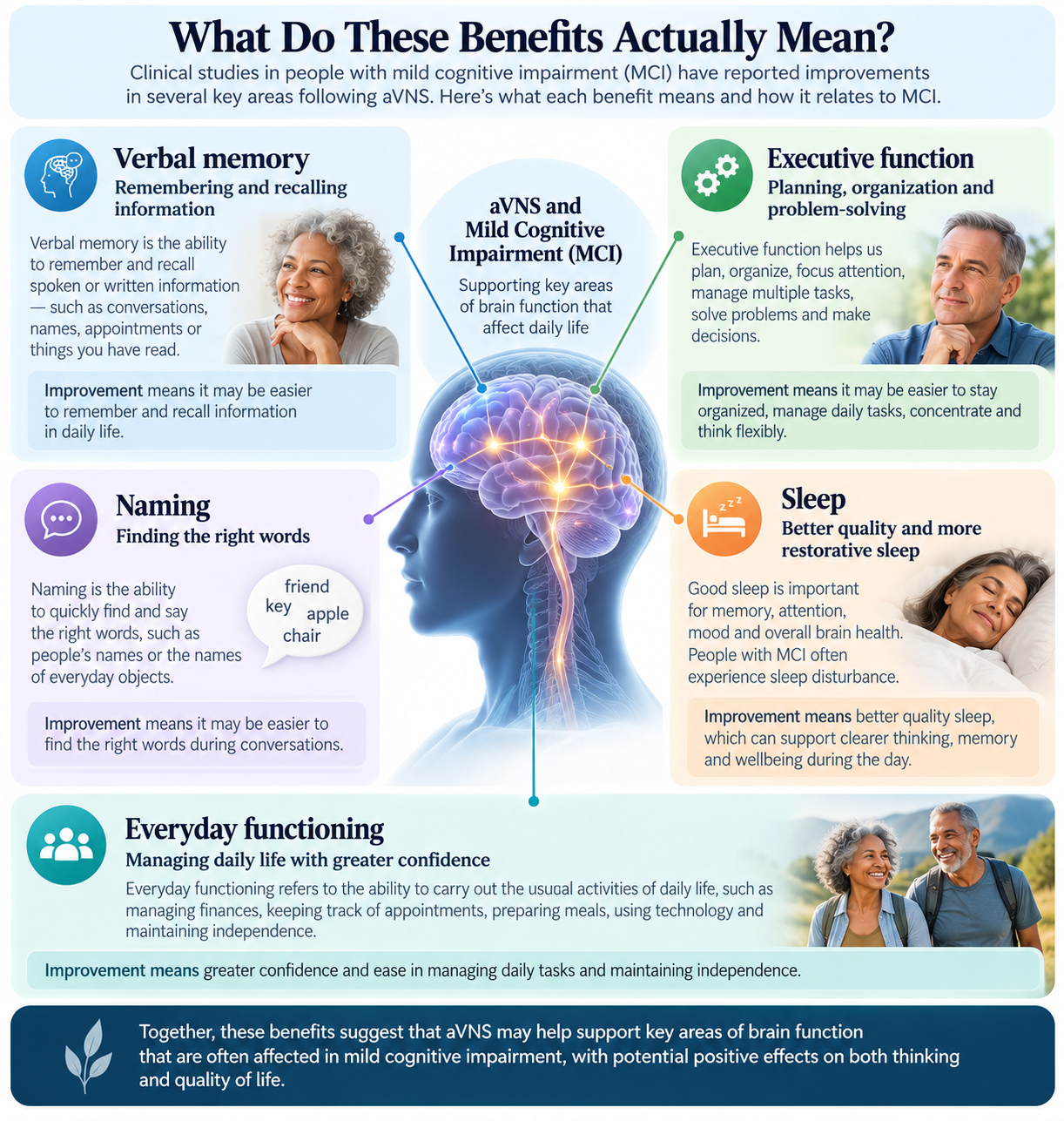
Other MCI research has demonstrated changes in brain networks involved in memory and attention. This is important because it provides objective evidence that aVNS is doing more than simply making people feel more alert—it appears capable of changing activity within brain systems involved in cognition.
There is another potentially important effect: neuroplasticity.
Neuroplasticity is the brain’s ability to adapt and strengthen useful neural connections. Vagus nerve stimulation has been shown to enhance this process, particularly when stimulation is paired with learning, cognitive exercises or rehabilitation. For someone with MCI, supporting the brain’s ability to maintain and strengthen its remaining networks could potentially be valuable.
Could aVNS Help Slow Further Cognitive Decline?
We do not yet know. Studies have not followed enough people for long enough to show that aVNS prevents MCI from progressing to dementia. But there are reasons to be hopeful. If research had shown only a small improvement on a memory test, the implications would be fairly limited. Instead, the emerging picture includes improved cognitive performance, changes in relevant brain networks and enhanced neuroplasticity. Research in Alzheimer’s disease adds another intriguing piece to that picture.
Alzheimer’s Disease
Early laboratory studies have produced some particularly striking findings.
In mice with Alzheimer-like disease, aVNS not only improved learning and memory, but was also associated with changes inside the brain itself. Researchers found less amyloid-beta accumulation and reduced inflammatory activity within the hippocampus, an area essential for memory.
A subsequent study in older mice with more established disease again found improvements in learning and memory together with reductions in Alzheimer-related brain changes.
Interestingly, the stimulation pattern mattered. One particular pattern produced substantial benefits while other patterns did not. This suggests that carefully selecting how the vagus nerve is stimulated may be important.
There is also early human evidence from implanted VNS. People with Alzheimer’s disease were followed for up to a year, and a substantial proportion remained stable or improved on standard cognitive assessments during a period when progressive decline would ordinarily be expected.
These small studies do not prove that VNS can stop Alzheimer’s disease. However, taken together with the aVNS laboratory findings, they raise the important possibility that vagus nerve stimulation might eventually prove capable of influencing the processes contributing to cognitive decline, rather than simply producing a short-lived improvement in concentration or memory.
For someone with MCI, that distinction is important—and it is one of the reasons the research offers genuine hope.
Cognitive Support in People Without MCI
There may also be a role for aVNS before significant cognitive impairment develops.
Stress, poor sleep, fatigue, illness and sustained mental demands can all affect attention, working memory, learning and mental flexibility.
Studies in healthy adults have found improvements in selected aspects of cognitive performance following aVNS. In one randomized study, a particular stimulation pattern improved both working-memory accuracy and response speed.
These improvements were accompanied by measurable changes in brain electrical activity related to attention, cognitive control and working-memory processing, providing objective evidence that stimulation was affecting the brain during the task.
Once again, not every stimulation pattern produced the same results—reinforcing the importance of using treatment parameters that are appropriate for the intended purpose.
What Does This Mean for Someone Concerned About Their Memory?
At this stage, it would be inappropriate to describe aVNS as a treatment proven to prevent dementia. But it would also understate the research to say that there is no meaningful evidence of potential benefit.
There are now positive signals at several levels:
people with MCI have shown measurable cognitive improvement;
brain networks involved in memory and attention have changed following treatment;
VNS can promote neuroplasticity;
early Alzheimer’s research has shown effects on memory as well as underlying brain changes; and
human implanted-VNS studies have provided preliminary evidence of cognitive stabilization or improvement in Alzheimer’s disease.
Taken together, these findings provide a reasonable basis for hope and for considering aVNS as part of a broader cognitive-support strategy—particularly for someone with MCI who wants to take proactive steps while cognitive function is still relatively well preserved.
The Luminnova InnateSignal™ treatment library therefore includes cognitive-support programs based on stimulation patterns used in the available research. These are intended to complement other measures associated with maintaining brain health, including exercise, good sleep, appropriate nutrition, management of cardiovascular and metabolic risk factors, social engagement and continued cognitive activity.
While we cannot guarantee that aVNS will prevent dementia, Luminnova InnateSignal™ aims to make use of a promising, non-invasive approach at a stage when supporting and preserving brain function may matter most.
Anxiety & Depression
Anxiety, persistent stress and depression can feel very different, but they share important connections with the nervous systems that regulate arousal, emotional processing, sleep and the body’s response to stress.
The vagus nerve forms part of the communication network linking the body with brain regions involved in these functions. This provides a practical reason why vagus nerve stimulation is being explored as a non-drug approach to supporting emotional and psychological wellbeing.
Importantly, the evidence is not limited to whether someone simply reports “feeling calmer.” Clinical studies have reported improvements in anxiety, perceived stress and depressive symptoms, alongside measurable changes in autonomic function and activity within brain networks involved in emotion and stress regulation.
ANXIETY, STRESS & EMOTIONAL REGULATION
For many people, anxiety is experienced just as strongly in the body as it is in the mind.
They may feel continually “on edge,” find themselves reacting strongly to relatively minor stresses, experience difficulty settling after becoming upset, or notice physical symptoms such as a racing heart, poor sleep, digestive disturbance or muscle tension.
This is where aVNS may be particularly relevant.
The vagus nerve is an important component of the body’s regulatory systems that help shift us away from prolonged physiological arousal and back toward rest, recovery and regulation.
Rather than trying to eliminate normal stress, the goal is to help the nervous system respond appropriately when needed — and then recover more effectively afterwards.
What does the evidence show?
Clinical studies have reported reductions in anxiety following non-invasive vagus nerve stimulation, including studies specifically using auricular stimulation.
Recent randomized research has also found improvements in anxiety symptoms and perceived stress with active transcutaneous vagus nerve stimulation compared with comparison stimulation.
The findings are particularly interesting because improvements in anxiety have also appeared in aVNS studies investigating other conditions. For example, a recent analysis of randomized studies involving people with sleep disorders found significant reductions in both anxiety and depression scores, alongside improvements in sleep.
This suggests that the effects of aVNS may extend beyond a single diagnosis and may reflect broader changes in the neural and autonomic systems involved in emotional regulation.
What might improvement feel like?
For someone living with anxiety, the potential benefit is not necessarily that worries or stressful situations disappear.
Improved regulation may instead mean:
feeling less overwhelmed by stressful situations
experiencing less intense physical anxiety
settling more easily after becoming upset
feeling less emotionally reactive
regaining a sense of calm more quickly
coping better with prolonged mental or emotional demands
and potentially sleeping better when stress and anxiety have been interfering with sleep.
For someone who feels that their nervous system is continually “on,” even a moderate improvement in the ability to shift out of that heightened state could make a meaningful difference to everyday wellbeing.
MORE THAN SIMPLY FEELING CALMER
There are objective reasons to believe that aVNS can influence the systems responsible for stress and emotional regulation.
Research has demonstrated changes in autonomic nervous-system activity and heart-rate variability, while brain-imaging studies have shown that auricular vagus nerve stimulation can influence regions involved in emotion, arousal and the processing of stress.
These findings are important because they suggest that changes in how people feel may be accompanied by measurable changes in the biological systems involved in regulating those feelings.
This provides a plausible explanation for why some people using aVNS describe feeling more settled, less reactive and better able to recover following stressful experiences.
THE IMPORTANT CONNECTION WITH SLEEP
Sleep and emotional regulation are closely interconnected.
Stress and anxiety can make it difficult to fall asleep or remain asleep. Poor sleep can then make the nervous system more reactive the following day, increasing anxiety, irritability and difficulty coping with stress.
aVNS research has independently reported improvements in sleep, anxiety, mood and autonomic regulation.
This raises the possibility of a beneficial cycle: improved nervous-system regulation may support better sleep, while better sleep may in turn make the nervous system more resilient and less reactive the following day.
WHAT DOES THIS MEAN FOR SOMEONE WHO FEELS ANXIOUS, STRESSED OR EMOTIONALLY OVERWHELMED?
The evidence suggests that aVNS may offer something particularly relevant: a way of helping a nervous system that repeatedly becomes overactivated return more readily toward a regulated state.
The clinical findings showing improvements in anxiety and perceived stress, together with objective evidence that aVNS can influence autonomic and brain function, provide more than a theoretical reason to consider it.
For someone looking for an additional, non-invasive approach to persistent anxiety, stress or emotional reactivity — particularly when these occur alongside sleep disturbance or other features of autonomic imbalance — aVNS provides a worthwhile option to explore.
DEPRESSION
Depression is much more than feeling sad. It can affect motivation, energy, sleep, concentration, relationships, enjoyment of life and the ability to function normally from day to day.
For some people, these symptoms persist despite antidepressant medication, psychotherapy and other established treatments.
One of the important reasons vagus nerve stimulation deserves attention in depression is that we already know that changing vagal signalling can influence the brain systems involved in mood.
And some of the most compelling evidence comes from people whose depression has been exceptionally difficult to treat.
WHAT HAVE WE LEARNED FROM IMPLANTED VAGUS NERVE STIMULATION?
The strongest long-term evidence comes from implanted vagus nerve stimulation (iVNS), which has been studied primarily in people with severe treatment-resistant depression.
This is an important population to understand.
Participants in the large RECOVER study had failed at least four adequate antidepressant treatments during their current depressive episode. Across the study population, they had experienced an average of approximately 13 unsuccessful antidepressant treatments over their lifetimes, and their current depressive episode had lasted an average of almost 18 years.
Despite this extraordinary degree of treatment resistance, active VNS produced greater improvement than comparison treatment across several important measures of depressive symptoms, overall clinical improvement, everyday functioning and quality of life.
The study’s prespecified primary depression measure did not distinguish the groups, but several other measures did significantly favor active VNS.
That broader picture is particularly important because recovery from depression is not simply about achieving a particular score on a questionnaire. Being able to function better, participate more fully in everyday life and experience an improvement in quality of life can be equally meaningful.
THE BENEFITS CAN BE REMARKABLY DURABLE
The longer-term RECOVER findings are especially encouraging.
Among people who had achieved meaningful benefit after the first year of active VNS, approximately 80% were still maintaining that benefit at 18 and 24 months.
Even more interestingly, improvement did not necessarily stop after the first year.
Among participants who had not yet experienced meaningful benefit at 12 months, approximately 30% went on to develop meaningful improvement during the following year.
This suggests something important about vagus nerve stimulation in depression: for some people, improvement may develop gradually rather than appearing immediately.
For someone living with persistent depression, these findings demonstrate that modifying vagal signalling can produce meaningful and remarkably durable changes, even in people whose depression has persisted despite numerous previous treatments.
CAN NON-INVASIVE aVNS PRODUCE SIMILAR BENEFITS?
This is the question of greatest relevance to InnateSignal™.
Unlike implanted VNS, aVNS stimulates vagal pathways non-invasively through the ear.
Clinical aVNS studies have reported improvements in depressive symptoms, sometimes accompanied by improvements in anxiety, sleep and quality of life, and the body of research supporting this approach continues to grow.
Reviews combining randomized studies have found an overall improvement in depression scores with aVNS.
In one 12-week randomized study involving 107 people with major depression, overall improvement with aVNS was comparable to that observed with the antidepressant citalopram, with higher remission rates with aVNS at some earlier assessment points.
A single study cannot establish that aVNS is equivalent to antidepressant medication, but the finding is nevertheless important: a completely non-invasive approach targeting vagal pathways produced clinically meaningful improvement in people with major depression.
WHY MIGHT VAGUS NERVE STIMULATION AFFECT MOOD?
The vagus nerve communicates extensively with the brainstem and, through these pathways, with higher brain regions involved in mood, motivation, emotional processing, stress responses and reward.
Vagus nerve stimulation therefore does not simply attempt to make someone “relax.”
It can influence neural networks that are directly involved in the biology of depression.
The long-term experience with implanted VNS demonstrates that these pathways can be therapeutically important. The growing aVNS literature suggests that stimulating the vagus nerve non-invasively through the ear may provide another way of engaging some of these same regulatory networks.
WHAT DOES THIS MEAN FOR SOMEONE WITH DEPRESSION?
The evidence from implanted VNS provides an important proof of principle: altering vagal signalling can produce meaningful and sometimes long-lasting improvement in depression, including in people with exceptionally difficult-to-treat illness.
Non-invasive aVNS research is now producing encouraging findings in the same general direction.
For someone whose depressive symptoms remain troublesome despite appropriate treatment — or who would like to explore an additional non-invasive approach to supporting mood, sleep and emotional regulation — there is a reasonable clinical basis for considering aVNS as part of a broader strategy for recovery.
Taken together, the evidence across anxiety, stress, sleep and depression supports a broader concept: vagal stimulation may help influence the interconnected brain and autonomic systems that determine not only how strongly we respond to emotional stress, but also how effectively we recover from it.
The Important Connection With Sleep
Sleep can be both a cause and a consequence of poor nervous-system regulation.
Stress and anxiety can make it difficult to sleep, while inadequate sleep can make the nervous system more reactive the following day—contributing to greater anxiety, irritability and difficulty coping with stress.
aVNS research has independently reported improvements in sleep, anxiety, mood and autonomic regulation.
This suggests a beneficial cycle: better regulation may support better sleep, while better sleep may make the nervous system less reactive and more resilient the following day.
What Does This Mean for Someone Who Feels Anxious, Stressed or Emotionally Overwhelmed?
The emerging evidence suggests that aVNS may do something particularly relevant for these individuals: help a nervous system that is repeatedly becoming overactivated return more readily toward a regulated state.
Not everyone will experience the same response, and we cannot predict how much benefit an individual will obtain. However, improvements in anxiety and perceived stress, together with objective evidence of changes in autonomic and brain function, provide more than a theoretical reason to consider aVNS.
Given its non-invasive nature and favorable risk profile, there is a reasonable basis for exploring a trial of aVNS in someone struggling with persistent stress, anxiety or emotional reactivity—particularly when these occur alongside sleep disturbance or other features of autonomic imbalance.
Obsessive-Compulsive Disorder (OCD)
OCD can be particularly difficult to live with when intrusive thoughts and repetitive urges or behaviours continue despite treatment.
The evidence for vagus nerve stimulation in OCD is not nearly as extensive as it is for depression, but there is an intriguing reason to believe that vagal stimulation may be capable of influencing OCD symptoms.
An Encouraging Early Signal
The most relevant human evidence comes from a small study of implanted VNS in people with severe, treatment-resistant anxiety disorders.
Seven participants had OCD.
After the initial 12 weeks of treatment, three of the seven experienced at least a 25% reduction in their OCD symptoms—enough to meet the study’s definition of a treatment response.
Importantly, this was not necessarily a short-lived effect. The positive response was still noted at six months.
There was also evidence of much longer-lasting benefit in some participants. Four years after implantation, four people from the broader anxiety-disorder group were still using VNS with sustained improvement, including two people with OCD.
For individuals whose symptoms had already proved extremely difficult to treat, seeing meaningful and sometimes sustained improvement is an encouraging signal.
Could Non-Invasive aVNS Produce Similar Effects?
This is the important unanswered question.
The OCD study used an implanted vagus nerve stimulator, and there is currently very little clinical research specifically testing non-invasive ear-based aVNS for OCD.
We therefore cannot assume that aVNS will reproduce the same results. However, the implanted findings demonstrate something important: altering vagal signalling appears capable of influencing OCD symptoms in at least some people.
That provides a biological and clinical reason to investigate whether stimulation of vagal pathways through the ear could offer some of the same benefits without requiring an implanted device.
What Does This Mean for Someone With OCD?
At present, the evidence is too limited to predict whether aVNS will help an individual with OCD. But it is not unreasonable to see the implanted-VNS findings as an early reason for hope. Meaningful responses occurred in several people with particularly difficult-to-treat illness, and some improvement persisted over time. Furthermore an increasing number of aVNS studies have echoed the results seen with implanted VNS - although the improvement may not be as rapid or to the same extent.
Given the favorable risk profile of non-invasive aVNS, this provides a reasonable basis for considering it as an exploratory approach for someone seeking additional options, with the understanding that the evidence for OCD remains at a much earlier stage than it does for depression, sleep or several other applications of aVNS.
Women’s Health
Some of the most encouraging emerging findings in women’s health involve endometriosis, adenomyosis and menstrual pain.
These conditions may seem very different, but they share processes that can be influenced by the nervous system—including pain signalling, inflammation, blood flow, stress responses and autonomic regulation.
The vagus nerve is particularly relevant because it helps regulate several of these processes. Early research is now suggesting that increasing vagal activity may not only help with symptoms such as pain, but in some conditions may also influence the biological processes contributing to the disease itself.
Endometriosis
Endometriosis can cause severe menstrual and pelvic pain, but pain is only one part of the disease. Endometriotic lesions can also undergo inflammation, tissue remodeling and progressive fibrosis (scarring).
This makes some of the early VNS research particularly intriguing.
What Happens When Vagal Activity Is Reduced?
In an animal model of endometriosis, researchers first examined what happened when vagal signalling was deliberately reduced.
The disease became more aggressive and more fibrotic.
This suggested that normal vagal activity may act as a type of natural brake on some of the processes that drive endometriosis.
Researchers then asked the obvious question: Could increasing vagal activity have the opposite effect?
The answer was encouraging.
What Happened With aVNS?
When auricular VNS was given for only 15 minutes a day, the endometriotic lesions that developed were substantially smaller, with average lesion weight reduced by approximately 50% when treatment began around the time the disease was induced.
But perhaps the more relevant finding for someone who already has endometriosis was what happened when treatment was started after the disease was established.
aVNS was still associated with:
reduced lesion burden
reduced pain sensitivity
substantially less fibrosis within the lesions
biological changes associated with a less invasive disease pattern
The reduction in fibrosis is particularly important.
Fibrosis contributes to the scarring, adhesions and progressive tissue changes associated with endometriosis. Animals with less fibrosis also tended to have smaller lesions and less pain sensitivity.
This suggests that vagal stimulation could eventually prove useful for more than symptom control.
What About Women With Endometriosis?
There is now an encouraging early human signal as well.
A small clinical study of women with endometriosis/adenomyosis found improvements in menstrual pain and related symptoms following aVNS.
Researchers also measured changes in heart-rate variability consistent with improved vagal/autonomic regulation.
This matters because the animal research had already suggested that reduced vagal activity may contribute to disease progression. Seeing symptomatic improvement together with measurable autonomic changes in women strengthens the rationale for investigating aVNS further.
What Does This Mean for Someone With Endometriosis?
We cannot yet claim that aVNS reduces endometriotic lesions or fibrosis in women—the evidence for those effects currently comes from animal research.
But the overall pattern is unusually encouraging:
reducing vagal activity worsened disease → increasing vagal activity reduced lesions, fibrosis and pain in animals → and aVNS has now produced symptomatic and autonomic improvements in women.
For someone living with endometriosis, particularly when pain remains troublesome, this provides a reasonable basis for hope and for considering a trial of aVNS.
The possibility that vagal stimulation may influence aspects of the underlying disease process makes this an especially important area for further clinical research.
Adenomyosis
Adenomyosis occurs when tissue similar to the lining of the uterus grows within the muscular wall of the uterus. It can cause severe menstrual pain, heavy bleeding and progressive changes within the uterine muscle, including fibrosis.
There is an interesting autonomic connection.
Women with adenomyosis have been found to show reduced vagal activity and increased sympathetic activity.
More importantly, this imbalance appears to relate to the severity of the disease.
Lower vagal activity has been associated with greater lesion stiffness—a measure related to fibrosis—as well as more severe menstrual pain and heavier bleeding.
That is an important observation because it suggests that autonomic dysfunction may be connected not only with how much pain a woman experiences, but potentially with characteristics of the affected tissue itself.
Laboratory research provides another piece of the puzzle. Increased pain-sensing nerve activity has been identified within fibrotic adenomyosis lesions, and reducing this abnormal neural signalling in animals reduced uterine fibrosis.
Together, these findings suggest that the nervous system may participate in the disease process rather than simply transmitting pain from an already abnormal uterus.
Why Might aVNS Be Worth Exploring?
This is where the endometriosis findings become particularly relevant.
Endometriosis and adenomyosis are distinct conditions, but both involve pain, inflammation, abnormal nerve signalling and fibrosis. Human research is already demonstrating abnormal autonomic regulation in adenomyosis, while vagal stimulation has produced striking effects on fibrosis and disease behaviour in experimental endometriosis.
Early clinical aVNS findings involving women with endometriosis/adenomyosis add further encouragement.
We do not yet have enough evidence to say that aVNS can alter adenomyosis itself. But for someone experiencing significant pain and other symptoms, the combination of human autonomic findings, early clinical improvement and supportive laboratory evidence provides a reasonable rationale for exploring aVNS.
Primary Dysmenorrhea
For some women, severe menstrual pain occurs even when investigations do not identify any underlying pelvic condition. This is known as primary dysmenorrhea.
Encouragingly, aVNS has now been studied in randomized clinical trials in women with primary dysmenorrhea. Women receiving treatment experienced less menstrual pain and fewer menstrual symptoms, with improvements also extending to the impact their periods had on daily activities and emotional wellbeing.
One of the most interesting findings is that the benefits may continue well beyond the treatment sessions themselves. In recent research, improvements were still evident six months after a single 10 day treatment course.
This is particularly encouraging because it suggests that aVNS may be doing more than providing temporary relief while stimulation is being delivered. If its effect were simply short-lived pain relief, we might expect symptoms to return once treatment stopped. Instead, the persistence of improvement across subsequent menstrual cycles raises the possibility that stimulation may produce more sustained changes in the systems involved in regulating menstrual pain.
The studies so far have been relatively small and larger trials are still needed. However, for someone experiencing recurrent and disruptive menstrual pain, these findings provide encouraging human evidence that aVNS may offer benefits that extend beyond the individual treatment session—and potentially well beyond the treatment period itself.
Polycystic Ovary Syndrome (PCOS)
PCOS involves much more than the ovaries. Insulin resistance, difficulties with weight regulation, inflammation, altered stress and autonomic responses, and changes in reproductive hormones can all play a part. These different factors can also reinforce one another, which is one reason PCOS can be so difficult to manage.
This makes aVNS an especially interesting area of research.
The vagus nerve helps regulate several of the body systems that can become disrupted in PCOS, including blood-sugar control, insulin signalling, inflammation, metabolism and the balance of the autonomic nervous system. Research discussed in the Metabolic Health section of this guide has already shown encouraging effects of aVNS on several of these areas. Human research has demonstrated improved glucose regulation, while laboratory studies have reported improvements in insulin sensitivity, weight regulation, abnormal fat accumulation and other aspects of metabolic health.
These findings were not specifically obtained in women with PCOS, so we do not yet know whether aVNS will improve menstrual regularity, ovulation, excess androgen activity or fertility. However, they are important because insulin resistance and metabolic dysfunction can contribute directly to many of the hormonal and reproductive problems associated with PCOS.
There is another encouraging piece to the picture. PCOS is frequently associated with an imbalance in autonomic regulation, including excessive sympathetic activity. Improving vagal activity may therefore offer a way of addressing more than one part of the condition at the same time—potentially supporting metabolic health while also encouraging healthier autonomic and inflammatory regulation.
For someone living with PCOS, this means the rationale for aVNS is now more than simply theoretical. We already have evidence that vagal stimulation can positively influence several of the underlying processes that are commonly disturbed in PCOS. What we do not yet know is how much these effects will translate into improvement in PCOS itself.
Direct clinical research in women with PCOS is still needed, but the emerging evidence provides genuine reason for interest and a reasonable basis for exploring aVNS as a supportive approach—particularly when insulin resistance, metabolic difficulties or autonomic imbalance are prominent features.
See Metabolic Health for more information on the emerging research involving blood-sugar regulation, insulin sensitivity, weight and metabolic function.
Ovarian & Ovulatory Function
The nervous system also communicates with the hormonal pathways that regulate ovarian function.
Preclinical research suggests that vagal pathways can interact with the hypothalamic–pituitary–ovarian axis—the communication system between the brain and ovaries that helps regulate reproductive hormones and ovulation.
This indicates that altering autonomic regulation could influence ovarian function.
It is an interesting biological signal, but human evidence is still needed before we know whether aVNS can meaningfully improve ovulation or ovarian function.
Fertility & Implantation
Successful implantation requires an extraordinarily coordinated interaction between hormones, blood flow, the immune system, inflammation and the endometrium.
Animal and laboratory research suggests that autonomic and inflammatory regulation can influence endometrial receptivity and implantation.
Because vagal stimulation can affect both inflammation and autonomic balance, researchers have proposed aVNS as a possible future adjunct to fertility treatment.
This remains an early and exploratory application. At present there is a biological rationale rather than sufficient clinical evidence to say that aVNS improves fertility or IVF success rates.
Menopause & Estrogen Deficiency
Menopause produces changes far beyond reproductive hormone levels. Changes in sleep, temperature regulation, metabolism, mood and autonomic nervous-system function can all contribute to symptoms.
Preclinical research suggests that vagal stimulation can influence several of these systems, including inflammation, metabolic regulation and the response to stress.
Menopausal hot flashes are of particular interest
Body temperature is partly regulated by the autonomic nervous system, which controls blood-vessel dilation, sweating and heat loss. Changes in autonomic regulation during menopause may therefore contribute to sudden flushing and sweating.
Direct clinical evidence for aVNS in menopausal hot flashes is currently limited. However, auricular stimulation has reduced hot flashes in men experiencing hormonally induced hot flashes during prostate-cancer treatment. Researchers proposed that stimulation of neural pathways within the ear—including potentially vagal pathways—may have contributed.
This is indirect evidence, rather than proof that aVNS treats menopausal hot flashes, but the autonomic rationale suggests that it may be worth a trial especially if accompanied by sleep disturbances which has solid evidence support.
Pregnancy
Although women with implanted VNS devices have have safely completed pregnancies, there is currently insufficient safety evidence to recommend routine aVNS treatment during pregnancy.
POSTPARTUM DEPRESSION
The weeks and months after childbirth involve major hormonal, physical, emotional and sleep-related changes. For some women, these changes are accompanied by persistent low mood, anxiety, loss of enjoyment and other symptoms of postpartum depression. Because the vagus nerve is involved in brain networks that help regulate mood, stress responses, inflammation and autonomic balance, researchers have begun exploring whether aVNS could provide additional support during this particularly vulnerable period.
Early human findings are encouraging.
In a multicenter clinical study involving women diagnosed with postpartum/peripartum depression, six weeks of non-invasive auricular vagus nerve stimulation produced substantial improvements in depressive symptoms. Average depression scores fell markedly, with 74% of participants meeting the study criteria for a clinical response and 61% reaching remission. Almost all of the women completing treatment reported at least some improvement, as did their clinicians.
More recent research has added another encouraging finding. In a randomized controlled study of 100 women following cesarean delivery, five days of aVNS improved postpartum mood and sleep. Most notably, one month after delivery, only 4% of women who received the active aVNS treatment had Edinburgh Postnatal Depression Scale scores of 13 or higher, compared with 26% in the comparison group.
Another randomized study following cesarean delivery also found lower depression and anxiety scores, better sleep and improved overall recovery among women receiving aVNS.
WHAT COULD THIS MEAN FOR SOMEONE EXPERIENCING POSTPARTUM DEPRESSION?
These findings are particularly interesting because aVNS offers a non-invasive, drug-free way of engaging neural pathways involved in mood and emotional regulation. The research is still developing, but the improvements seen so far—including meaningful reductions in established measures of depression and encouraging response and remission rates—provide good reason for continued investigation of aVNS as a potential option for supporting women affected by postpartum depression.
The possibility that aVNS may also improve sleep, anxiety, pain and autonomic regulation is especially relevant during the postpartum period, when several of these challenges can occur together.
What Does This Mean for Women Considering aVNS?
The strength of the evidence differs considerably depending on the condition.
For endometriosis, adenomyosis and primary dysmenorrhea, we already have encouraging human findings, supported in the case of endometriosis and adenomyosis by particularly interesting objective and preclinical evidence involving autonomic function, pain signalling, lesion behaviour and fibrosis.
For PCOS, ovarian function, fertility and menopause, the evidence is much earlier. Here, the rationale comes predominantly from what we know about vagal regulation and from laboratory or animal research rather than established clinical benefit in women.
That distinction is important—but it does not mean the early research lacks value. It tells us where there is already a clinical signal and where we are extrapolating from biology that makes aVNS worth investigating.
Given the non-invasive nature and generally favorable risk profile of aVNS, the existing findings provide a reasonable basis for exploring its use in selected women’s-health conditions, particularly those for which encouraging human evidence has already emerged.
Luminnova InnateSignal™ includes a series of evidence-informed women’s health programs, allowing different stimulation approaches to be explored according to the particular condition rather than relying on a single generic aVNS setting.
Metabolic Health
Metabolic health affects far more than body weight. It includes how effectively the body uses glucose and insulin, stores and burns fat, regulates appetite and energy expenditure, and responds to the metabolic effects of chronic stress.
When these systems become disrupted, the result may be insulin resistance, difficulty losing weight, abnormal blood sugar or cholesterol levels, fatty liver and, eventually, type 2 diabetes. Metabolic dysfunction can also contribute to conditions such as PCOS.
This is becoming a particularly interesting area of aVNS research because the vagus nerve participates in communication between the brain, liver, pancreas, digestive system and fat tissue—organs that work together to regulate metabolism. Importantly, the emerging research is no longer based simply on the idea that stimulating the vagus nerve might influence metabolism. Studies have now reported measurable changes in several of these systems.
Blood sugar and insulin regulation
One of the most encouraging findings comes from a randomized human study involving people with impaired glucose tolerance—a stage at which blood-sugar regulation is already abnormal but has not necessarily progressed to diabetes.
After 12 weeks of aVNS, participants showed significantly better control of their blood sugar following a glucose challenge. Improvements were also seen over time in fasting glucose and HbA1c, a measure of longer-term blood-sugar control.
This is important because it provides direct human evidence that aVNS may influence glucose regulation, rather than relying entirely on laboratory studies.
Animal research strengthens this finding. In models of diabetes and insulin resistance, aVNS has been associated with improvements in blood glucose, insulin levels, insulin sensitivity and insulin signalling in tissues involved in metabolic control.
Taken together, these findings suggests that aVNS may potentially have a supportive role in people struggling with insulin resistance, prediabetes or other forms of metabolic dysfunction.
Weight regulation
The weight findings are also intriguing.
Several animal studies have found that aVNS reduced excessive weight gain and body-fat accumulation. What makes the research particularly interesting is that apparently different biological routes may be involved.
In one study, aVNS reduced food and calorie intake as well as weight gain. The researchers went on to investigate the brain circuitry involved and found evidence that stimulation was influencing an orexin-related pathway in the hypothalamus, an area of the brain involved in appetite and energy regulation.
In another series of experiments, animals gained less weight even though they did not eat less.
That distinction matters.
It suggests that vagal stimulation may potentially influence weight through more than appetite suppression alone. In some circumstances it may affect how the body regulates or uses energy.
Brown fat and energy expenditure
More recent research makes this possibility especially interesting.
Not all body fat behaves in the same way. White fat primarily stores energy, whereas brown fat can burn energy to produce heat. Increasing the activity of brown fat is therefore an important area of metabolic and obesity research.
In a recent obesity study, aVNS was associated with:
less weight gain and accumulation of white fat;
increased brown-fat activity;
increased UCP1, an important marker of the body’s heat-producing, energy-burning machinery;
healthier mitochondrial structure and function; and
changes in branched-chain amino-acid metabolism, another pathway increasingly linked with obesity and metabolic health.
These are valuable findings because they provide objective biological evidence of changes within fat tissue itself. The animals were not simply weighing less—their underlying energy and fat metabolism appeared to be changing.
Liver fat and cholesterol
The metabolic effects may extend beyond glucose and body weight.
Experimental research has also reported improvements in triglycerides, cholesterol and accumulation of fat within the liver following aVNS.
This is potentially important because insulin resistance, excess abdominal fat, abnormal cholesterol and fatty liver frequently occur together. Rather than viewing each as an entirely separate problem, aVNS research is beginning to suggest that vagal regulation may influence several interconnected parts of metabolic health.
Chronic stress and metabolic health
Another particularly interesting line of research involves chronic stress.
Prolonged stress can affect much more than mood. Persistent disruption of the body’s stress and autonomic systems can contribute to higher glucose and insulin levels, insulin resistance, abnormal cholesterol, increased blood pressure and other features associated with metabolic syndrome.
In an experimental model of chronic stress, vagus nerve stimulation improved several of these abnormalities, including blood glucose, insulin resistance, cholesterol and blood pressure. Researchers also identified changes in cellular pathways involved in metabolic regulation.
This raises an intriguing possibility: for some people, supporting healthier autonomic regulation may potentially help address one of the contributors to metabolic dysfunction rather than focusing only on its consequences.
Why these findings matter
No single study tells us that aVNS is a treatment for obesity, insulin resistance or diabetes. Much of the detailed research involving weight, fat metabolism and insulin sensitivity is still preclinical.
However, the overall picture is becoming increasingly encouraging. Positive findings are appearing across multiple independent aspects of metabolism:
blood-sugar regulation · insulin signalling and sensitivity · appetite · body weight · abdominal and other fat stores · brown-fat activity · mitochondrial function · liver fat · cholesterol · energy regulation · stress-related metabolic dysfunction
Most importantly, these findings are supported by objective measurements, and the emerging human evidence shows that metabolic effects are not confined to animal models.
Rather than suggesting that aVNS simply causes weight loss, the research points toward something potentially more useful: vagal stimulation may influence several of the biological systems that determine how the body regulates glucose, insulin, appetite, fat storage and energy use.
For people struggling with insulin resistance, prediabetes, metabolic syndrome, weight regulation or metabolic features associated with conditions such as PCOS, this provides a genuine reason for interest.
The research is still developing, but there is now a reasonable basis for exploring aVNS as a supportive approach to improving metabolic regulation, while further human studies determine just how much of the encouraging experimental evidence can be translated into everyday clinical benefit.
Cancer Support & Recovery
A cancer diagnosis affects far more than the tumor itself. Cancer and its treatment can place considerable strain on the nervous, immune and inflammatory systems, contributing to problems such as poor sleep, profound fatigue, pain, impaired concentration and memory, low mood, anxiety and slower recovery after treatment or surgery.
This is one reason aVNS is becoming particularly interesting in cancer care.
Rather than targeting one symptom at a time, stimulation of the vagus nerve has the potential to influence several interconnected systems involved in sleep, pain, inflammation, autonomic regulation, mood, cognition and recovery. Importantly, researchers have now begun testing aVNS directly in people with cancer — with encouraging early results.
Helping people with cancer sleep better and feel less fatigued
One of the clearest examples comes from a recent clinical study involving women with breast cancer who were experiencing significant sleep problems.
Participants used aVNS for just 15 minutes each evening for two weeks.
At the end of treatment, they experienced:
less severe insomnia
better overall sleep quality
shorter time to fall asleep
better sleep efficiency
fewer nighttime awakenings
27% reduction in cancer-related fatigue
26% reduction in depression scores
increased heart-rate variability (HRV)
The improvement in fatigue is particularly noteworthy. Cancer-related fatigue can be very different from ordinary tiredness: it can be persistent, overwhelming and poorly relieved by rest. In this study, improvement occurred after only two weeks of treatment.
The increase in HRV is also interesting because cancer and cancer treatment can be associated with autonomic imbalance — including reduced healthy vagal regulation. aVNS therefore appeared to be doing more than simply helping participants relax at bedtime; measurable autonomic changes accompanied the improvements they were experiencing. (PubMed)
Reducing cancer-treatment-related pain
There is also encouraging randomized clinical evidence for pain.
A multicenter Phase 2 trial studied 116 people who had developed moderate-to-severe neuropathic pain following radiotherapy for head and neck cancer. Everyone received pregabalin, while half also received active aVNS for 30 minutes twice daily for seven days.
Pain fell substantially more in those receiving aVNS.
Perhaps most meaningful from a patient’s perspective:
65.5% of those receiving aVNS achieved at least a 30% reduction in pain, compared with 36.2% in the comparison group.
Even more strikingly, 48.3% achieved at least a 50% reduction in pain, compared with 24.1% of those who did not receive active aVNS.
Participants receiving aVNS also reported improvements in fatigue and aspects of quality of life during the treatment period.
This provides direct evidence that aVNS may help with a difficult consequence of cancer treatment rather than simply changing a laboratory measurement. (PubMed Central (PMC))
Supporting the brain during recovery from cancer surgery
Cancer surgery can be particularly demanding for older adults, and some people experience a noticeable decline in memory, attention or other aspects of cognitive function afterwards.
A randomized controlled trial involving older adults undergoing surgery for gastrointestinal tumors found better cognitive outcomes in those receiving perioperative aVNS.
From seven days after surgery onward, cognitive scores were significantly better in the aVNS group. Importantly, this was not merely an immediate postoperative effect: the difference was still present one month and three months later.
At three months, the difference between the groups on the Montreal Cognitive Assessment was approximately 3 points.
There were also objective biological changes. People receiving aVNS had lower levels of IL-1β, an inflammatory cytokine, and S100β, a marker associated with neurological injury and stress.
The greater the reduction in these markers, particularly IL-1β, the better the change in cognitive performance tended to be.
For someone approaching cancer surgery, this raises an intriguing practical possibility: supporting vagal regulation around the time of surgery may potentially help protect brain function and recovery, while also moderating some of the inflammatory response associated with surgery. (PubMed)
Why might aVNS have such wide-ranging effects?
Sleep, fatigue, pain, mood and cognition can appear to be completely separate problems. Biologically, however, they are closely interconnected.
The vagus nerve helps coordinate communication between the brain, heart, digestive system and immune system. It also participates in the body’s mechanisms for controlling excessive inflammation.
Cancer itself, surgery, chemotherapy, radiotherapy, disrupted sleep and prolonged physiological stress can all disturb this balance.
This means that improving vagal signaling may potentially influence several problems at the same time rather than addressing each symptom independently.
Researchers studying breast cancer have therefore proposed a neuroimmune-autonomic model in which aVNS may help interrupt the cycle between reduced vagal activity, sympathetic overactivity, disturbed sleep, inflammation, fatigue, mood disturbance, pain and cognitive symptoms.
This provides a plausible biological explanation for why improvements in several seemingly unrelated symptoms can occur together. (PubMed)
Could aVNS also influence the biology of cancer itself?
This is a separate — and particularly important — question.
The answer is not yet confirmed in humans. However, there are some intriguing experimental findings suggesting that vagal stimulation can influence biological pathways involved in inflammation, immune surveillance, oxidative stress, programmed cell death and the tumor microenvironment.
These findings are important because the body’s relationship with cancer involves much more than the cancer cell itself.
Inflammation and the tumor environment
Persistent inflammatory signaling can help create an environment that favors cancer development and progression.
The vagus nerve participates in a natural regulatory system sometimes called the cholinergic anti-inflammatory pathway. Through this pathway, vagal signaling can restrain excessive production of inflammatory mediators.
Among the signaling pathways influenced by vagal stimulation are NF-κB, TNF-α, IL-1β and IL-6 — molecules that are also involved in the inflammatory environment surrounding many cancers.
This does not mean that simply reducing inflammation treats cancer. It does, however, provide a biologically plausible reason for investigating whether improving vagal regulation could make the body’s internal environment less supportive of some of the processes that cancers exploit. (Frontiers)
A striking colon-cancer experiment
One of the most interesting direct experiments used a well-established model in which colon carcinogenesis was chemically induced.
The animals developed abnormal precancerous and neoplastic changes in the colon together with oxidative damage, autonomic dysfunction and altered inflammatory signaling.
Animals treated with aVNS showed a markedly different biological response.
Treatment was associated with:
fewer abnormal and neoplastic colonic lesions
improved microscopic appearance of the colon
reduced oxidative damage
restoration of mitochondrial apoptosis — the process by which severely abnormal cells can trigger their own programmed death
increased α7 nicotinic acetylcholine receptor signaling, consistent with activation of the cholinergic anti-inflammatory pathway
and reductions in:
NF-κB
TNF-α
HMGB1
These findings are especially interesting because they were not limited to an improvement in symptoms or an inflammatory blood marker. Researchers observed changes within the affected tissue itself, including the abnormal lesions and cellular pathways involved in carcinogenesis.
This information was obtained based on animal research, so it does not guarantee that the same effect will occur in human cancer. Nevertheless, it provides genuine experimental evidence that aVNS can interact with biological processes involved in carcinogenesis rather than the relationship being purely theoretical. (PubMed Central (PMC)) Furthermore, findings in animal research have been repeatedly replicated in later human studies which is encouraging.
Cancer cells and programmed cell death
One of the body’s important defenses against cancer is apoptosis, or programmed cell death.
When a cell becomes sufficiently damaged or abnormal, normal cellular machinery can instruct that cell to destroy itself. Cancer cells frequently acquire mechanisms that allow them to evade this process.
In the colon-cancer experiment, carcinogen exposure suppressed mitochondrial apoptotic signaling. aVNS was associated with restoration of this pathway.
This does not establish aVNS as a way of killing human cancer cells. It does, however, add another potentially important mechanism to the picture: vagal stimulation affected not only inflammation but also cellular machinery involved in determining whether damaged cells survive. (PubMed Central (PMC))
Could aVNS help the immune system recognize cancer?
The immune system continuously surveys tissues for abnormal cells. CD8+ cytotoxic T cells are particularly important because they can recognize and destroy cells displaying abnormal or cancer-associated signals.
Researchers have therefore examined whether vagal stimulation changes immune activity inside tumors.
In an experimental lung-cancer study, VNS significantly increased activation of tumor-infiltrating CD8+ T cells. These cells showed increased expression of IFN-γ and CD137, both associated with activated antitumor T-cell responses.
VNS also reduced some immunosuppressive regulatory T-cell activity and altered several immune signals within the tumor environment.
Importantly, these immune changes were not accompanied by a measurable reduction in tumor growth during the study period, either when VNS was used alone or when added to radiotherapy. However, this finding needs to be interpreted in the context of the study design and duration. In the clinical arm, aVNS was administered for only six weeks during chemoradiotherapy, with no extended post-treatment follow-up reported. This is sufficient to investigate relatively rapid biological and immune responses, but may be far too short to determine whether those changes could ultimately influence cancer progression, recurrence or survival.
The study therefore provides important evidence that vagal stimulation can influence immune activity relevant to cancer, but it does not establish whether longer-term treatment could—or could not—translate these biological effects into meaningful differences in cancer outcomes. That remains an important unanswered question.
A small accompanying study nevertheless demonstrated that daily non-invasive VNS could be administered to people with locally advanced lung cancer throughout six weeks of chemoradiotherapy and was feasible and well tolerated. (PubMed Central (PMC))
What could this potentially mean for someone living with cancer?
At this stage, the strongest reason for considering aVNS in cancer care is not the expectation that it will shrink a tumor.
It is the possibility of helping the person who is living with the cancer.
The emerging clinical evidence suggests potential benefits in areas that can have a major impact on everyday life:
better sleep
less cancer-related fatigue
less treatment-related neuropathic pain
better mood and emotional wellbeing
improved autonomic regulation
support for cognitive function and postoperative recovery
modulation of excessive inflammatory signaling
These are meaningful outcomes in their own right.
At the same time, there is an additional and intriguing biological layer to the research. Experimental studies show that vagal stimulation can influence inflammatory signaling, oxidative stress, programmed cell death and immune activity within the tumor environment.
We do not yet know whether these effects will ultimately translate into improved cancer control or survival in humans. What they do tell us is that the vagus nerve is connected to biological systems that are highly relevant to cancer — and that stimulating this pathway can measurably change some of those systems.
For someone undergoing cancer treatment or living with the longer-term consequences of cancer, aVNS may therefore play a valuable role: supporting sleep, energy, pain control, brain function, autonomic balance and recovery while simultaneously engaging the body’s own neuroimmune regulatory pathways.
The clinical evidence is still developing, but it has already moved beyond theory. People with cancer have now received aVNS in clinical studies, with measurable improvements reported in several important aspects of recovery, symptoms and quality of life.
Early preclinical findings raise the additional possibility that aVNS may inhibit some of the biological processes involved in cancer development and progression, although its effectiveness as a treatment for cancer itself has not been established.
Importantly, the evidence available so far has not suggested that aVNS promotes cancer development or tumor growth. This is reassuring because, when considering any supportive therapy for someone with cancer, an important question is whether improving symptoms or recovery could inadvertently stimulate the cancer itself. The findings to date point in the opposite direction: experimental studies have demonstrated potentially favorable effects on inflammation, oxidative stress, programmed cell death and antitumor immune activity, with some models also showing reductions in precancerous and neoplastic changes.
Why We Believe InnateSignal™ Is Worth Exploring
No treatment works for everyone, and no treatment can guarantee a particular result.
But there are good reasons why we believe aVNS deserves serious consideration rather than being regarded simply as another wellness technology.
THE EFFECTS ARE BIOLOGICALLY MEASURABLE
The case for aVNS does not depend only on people reporting that they “feel better.”
Across different areas of research, investigators have documented objective changes including altered brain activity on functional imaging, changes in autonomic and cardiac regulation, reductions in inflammatory markers, changes in gastrointestinal function and motility, improvements in cognitive testing, changes in pain processing, objectively recorded reductions in abnormal cardiac rhythm - and even suppression of cancer cell growth.
These findings are important because they demonstrate that stimulation through the ear can produce measurable physiological effects within the body and brain.
POSITIVE CLINICAL FINDINGS NOW EXTEND ACROSS MULTIPLE BODY SYSTEMS
Encouraging findings have been reported in areas including sleep, autonomic dysfunction, pain, migraine, gastrointestinal disorders, mood, cognition, rehabilitation, inflammatory conditions, cardiovascular regulation, metabolic health and women’s health.
The strength of the evidence is not the same for every condition. Some applications are supported by randomized human trials, while others have smaller clinical studies or are currently supported mainly by compelling preclinical evidence.
But there is an important common thread.
Many of these apparently unrelated conditions involve systems that the vagus nerve helps regulate: autonomic balance, inflammation, brain–body communication, pain processing, stress responses, metabolism and neuroplasticity.
This provides a coherent biological explanation for why vagal stimulation may have effects across seemingly very different areas of health.
ANIMAL RESEARCH HAS PROVIDED IMPORTANT CLUES THAT HAVE LATER BEEN SEEN IN PEOPLE
Some of the most interesting aVNS research begins before a treatment is studied extensively in people.
Animal models allow researchers to investigate not only whether stimulation produces an effect, but also what may be happening inside the brain and body — including changes in inflammatory pathways, neurotransmitters, metabolism, nerve signalling and organ function that would be much more difficult to investigate directly in humans.
Importantly, some effects demonstrated in animal aVNS research have subsequently been observed in human clinical research.
For example, animal studies have reported antidepressant-like effects, metabolic changes and improvements in gastrointestinal function. Subsequent human studies have observed related effects, including improvements in depression, changes in post-meal ghrelin responses and improvements in gastrointestinal symptoms and physiology.
These examples do not mean that every result seen in an animal will occur in a person, nor that the ideal stimulation settings will necessarily be identical between species.
They do, however, demonstrate something important: animal responses to vagal stimulation can provide biologically meaningful clues about effects that may also be relevant in humans.
WHY THIS MATTERS FOR INNATESIGNAL™
This translational history influences how we have developed InnateSignal™.
Where a stimulation approach has already produced meaningful results in human clinical research, those findings are given the greatest weight in developing our programs.
However, we do not believe that promising findings should automatically be ignored simply because human trials have not yet caught up with the laboratory research.
For selected applications, InnateSignal™ therefore also includes exploratory stimulation settings informed by compelling animal research, particularly where the findings are biologically plausible, relevant to an important area of health and consistent with what is already known about vagal physiology.
These exploratory programs are clearly distinguished from settings supported by direct human clinical evidence.
The purpose is not to assume that an animal result will automatically translate to a person. It is to make carefully selected, research-informed stimulation approaches available for exploration while the clinical science continues to develop.
For someone interested in an area where the human evidence is still emerging, this provides an opportunity to explore a stimulation approach based on actual experimental findings rather than arbitrary device settings.
THERE IS EVIDENCE THAT THE EFFECTS CAN BUILD OVER TIME
Another encouraging feature of the research is that aVNS does not necessarily behave like a treatment whose effect exists only while the device is switched on.
In several areas of research, improvement has developed progressively with repeated stimulation. Some studies have also found that benefits persist beyond an individual treatment session or remain detectable after a treatment period has ended.
This suggests that, at least in some circumstances, repeated stimulation may produce longer-lasting changes in the regulatory systems being targeted.
That possibility is particularly relevant to InnateSignal™, where the objective is not simply to create a temporary sensation during treatment, but to support healthier regulation over time.
Why Does InnateSignal™ Use Different Programs?
One of the most important lessons we have learned from the research is that there is no single universally established “best” aVNS setting.
Researchers have used different stimulation frequencies, pulse widths, timing patterns and treatment durations—and different approaches have produced encouraging results for different purposes.
A stimulation pattern used successfully for sleep may be quite different from one studied for migraine, metabolic health, gastrointestinal symptoms, pain, autonomic dysfunction or neurological rehabilitation.
We therefore do not believe it makes sense to take one generic stimulation setting and assume that it is equally appropriate for every condition.
This is the principle behind Luminnova InnateSignal™.
Our approach is evidence-informed and indication-specific
We have reviewed the published aVNS literature to identify stimulation approaches associated with positive findings for particular conditions and physiological goals.
Where the published research provides sufficient information, an InnateSignal™ program is designed to reproduce the research protocol as closely as our device allows.
Where several successful approaches exist, more than one program may be retained because they may act through somewhat different mechanisms or may be better suited to different treatment goals.
Where the evidence is earlier or incomplete, we may include an adapted or exploratory program based on the closest available scientific evidence. These programs are distinguished from those that directly reproduce a published clinical protocol.
This creates a growing evidence-informed library of stimulation programs rather than one generic aVNS setting.
Starting with the person—not simply the diagnosis
Even people with the same diagnosis can be very different.
One person’s main difficulty may be poor sleep and autonomic overactivation. Another may have prominent inflammation. Another may be struggling primarily with pain, fatigue, gastrointestinal symptoms, metabolic dysfunction or impaired recovery.
InnateSignal™ therefore considers both the condition being addressed and the dominant symptoms or physiological problems affecting that individual.
The initial program provides a rational starting point—not a guarantee that it will be the best program for that particular person.
Response can then be assessed using what matters most for the treatment goal. Depending on the condition, this might include symptoms, sleep, functional ability, blood pressure, heart rhythm, HRV, laboratory markers, cognitive testing or other objective measurements.
If the response is incomplete, another evidence-supported stimulation approach may sometimes be considered rather than concluding immediately that the person simply “doesn’t respond” to aVNS.
That is an important part of the Luminnova philosophy:
the goal is not simply to deliver stimulation—it is to identify the most appropriate evidence-informed stimulation strategy for the individual and the outcome we are trying to improve.
A Reasonable Treatment to Explore
There are still important questions to answer about aVNS. We do not yet know the optimal stimulation pattern for every condition, why some people respond more strongly than others or how much benefit every individual will experience.
But uncertainty does not mean that there is no basis for treatment.
aVNS already combines several features that are rarely found together in an emerging therapy:
a well-established biological pathway · measurable effects on the brain and body · encouraging human clinical findings · the ability to use treatment repeatedly at home · no surgery · no implanted device · and a favourable safety and tolerability profile.
A 2024 clinical review encompassing more than 3,200 active and comparison participants across 109 studies similarly concluded that aVNS appeared safe and tolerable while showing favourable therapeutic effects across a wide range of clinical populations.
For many people, particularly when existing approaches have produced incomplete results or when there is a desire to add a non-drug strategy, this combination makes a carefully selected trial of aVNS a reasonable option to explore.
The response may be obvious for some people and more gradual or modest for others. Some people will not respond.
But the practical advantages of aVNS mean that it is often possible to find out whether it is helpful without surgery, implantation or a major treatment burden.
Making Informed Decisions About Your Care
InnateSignal™ is intended to give people another evidence-informed option, not to take control of treatment decisions away from them.
We believe that patients should have a meaningful say in the direction of their healthcare. That requires access to understandable information about what is known, what remains uncertain, the potential benefits, the limitations and the available alternatives. Once properly informed, a person’s own priorities, treatment goals, tolerance of risk and preferences should form an important part of decisions about their care.
At the same time, exploring aVNS should not inadvertently delay investigation or treatment of a condition where delay could cause harm. Prescribed medication or other medically necessary treatment should also not be stopped or reduced without appropriate discussion with the treating clinician, particularly where sudden withdrawal or inadequate treatment could be dangerous.
This does not mean that existing treatment can never change. If a person improves and wishes to reconsider medication or another therapy, that is a perfectly reasonable discussion to have. The aim should be informed, shared decision-making—allowing the patient and clinician to consider the response to aVNS, the benefits and disadvantages of existing treatments, objective findings where available, and the patient’s own goals before deciding together what should come next.
Ultimately, Luminnova InnateSignal™ is about expanding treatment possibilities: using the emerging science of vagal neuromodulation to provide another practical, non-invasive and evidence-informed way of helping the body regulate, adapt and recover.
REFERENCES
The studies below represent selected key publications supporting the clinical and scientific evidence discussed throughout this Guide. They include systematic reviews, randomized clinical trials and important supporting human studies. Where relevant, preclinical research or studies using implanted VNS rather than non-invasive auricular VNS are clearly identified.
Foundational Evidence & Safety
Gerges ANH, Williams EER, Hillier S, et al. Clinical application of transcutaneous auricular vagus nerve stimulation: a scoping review. Disability and Rehabilitation. 2024;46(24):5730–5760. doi:10.1080/09638288.2024.2313123. PMID: 38362860.
Scoping review — 109 studies across 21 clinical populations.
Kim AY, Marduy A, de Melo PS, et al. Safety of transcutaneous auricular vagus nerve stimulation (taVNS): a systematic review and meta-analysis. Scientific Reports. 2022;12:22055. doi:10.1038/s41598-022-25864-1. PMID: 36543841.
Systematic review and meta-analysis — 177 studies involving 6,322 participants.
Sleep & Recovery
de Oliveira HM, Gallo Ruelas M, Viana Diaz CA, et al. Transcutaneous Auricular Vagus Nerve Stimulation in Insomnia: A Systematic Review and Meta-Analysis. Neuromodulation. 2025;28(8):1332–1340. doi:10.1016/j.neurom.2025.04.001. PMID: 40323248.
Zhang S, Zhao Y, Qin Z, et al. Transcutaneous Auricular Vagus Nerve Stimulation for Chronic Insomnia Disorder: A Randomized Clinical Trial. JAMA Network Open. 2024;7(12):e2451217. doi:10.1001/jamanetworkopen.2024.51217. PMID: 39680406.
Randomized clinical trial with post-treatment follow-up.
Do M, Evancho A, Tyler WJ. Bilateral transcutaneous auricular vagus nerve stimulation for the treatment of insomnia in breast cancer. Scientific Reports. 2026;16:1081. doi:10.1038/s41598-025-30600-6. PMID: 41345210.
Human pilot study — improvements in insomnia, sleep quality, sleep efficiency, fatigue, depression and HRV.
Autonomic Health
Stavrakis S, Chakraborty P, Farhat K, et al. Noninvasive Vagus Nerve Stimulation in Postural Tachycardia Syndrome: A Randomized Clinical Trial. JACC: Clinical Electrophysiology. 2024;10(2):346–355. doi:10.1016/j.jacep.2023.10.015. PMID: 37999672.
Randomized human trial — heart-rate response, HRV, inflammatory markers and adrenergic autoantibodies.
Maestri R, et al. Impact of optimized transcutaneous auricular vagus nerve stimulation on cardiac autonomic profile in healthy subjects and heart failure patients. Physiological Measurement. 2024. doi:10.1088/1361-6579/ad5ef6. PMID: 39016202.
Randomized crossover human studies examining HRV and cardiac autonomic responses.
Pain Regulation
Chen J, Kuang H, Chen A, et al. Transcutaneous Auricular Vagus Nerve Stimulation for Managing Pain: A Scoping Review. Pain Management Nursing. 2025;26(1):33–39. doi:10.1016/j.pmn.2024.11.006. PMID: 39690039.
Akkurt MF, Özden AV, Akkurt HE, Akkurt B, Bildik C. Effects of left and bilateral transcutaneous auricular vagus nerve stimulation on pain, mood, and autonomic nervous system in female patients with fibromyalgia: a randomized controlled trial. Physiotherapy Theory and Practice. 2026;42(5):657–667. doi:10.1080/09593985.2025.2594572. PMID: 41332177.
Randomized human fibromyalgia trial — pain, function, mood and HRV outcomes.
Demircioğlu G, et al. Comparison of the efficacy of auricular vagus nerve stimulation and conventional low back rehabilitation in patients with chronic low back pain. Complementary Therapies in Clinical Practice. 2024. PMID: 38815433.
Randomized human study.
Tavares-Figueiredo I, Pers YM, Duflos C, et al. Effect of Transcutaneous Auricular Vagus Nerve Stimulation in Chronic Low Back Pain: A Pilot Study. Journal of Clinical Medicine. 2024;13(24):7601. doi:10.3390/jcm13247601. PMID: 39768526.
Three-month human pilot — pain, disability and quality-of-life outcomes.
Prott LS, Kaldenhoven V, Hugger A, et al. Transcutaneous Auricular Vagus Nerve Stimulation for the Treatment of Myoarthropathic Symptoms Associated With Temporomandibular Disorders—A Pilot Randomised Controlled Trial. Journal of Oral Rehabilitation. 2025;52(12):2351–2360. doi:10.1111/joor.70039. PMID: 40814998.
Randomized human TMD pilot study.
Migraine Headaches
Straube A, Ellrich J, Eren O, Blum B, Ruscheweyh R. Treatment of chronic migraine with transcutaneous stimulation of the auricular branch of the vagal nerve: a randomized, monocentric clinical trial. Journal of Headache and Pain. 2015;16:63. doi:10.1186/s10194-015-0543-3. PMID: 26156114.
Randomized human trial.
Acute Inflammation | COVID-19
COVID-19
Transcutaneous Auricular Vagus Nerve Stimulation Improves Inflammation but Does Not Interfere with Cardiac Modulation and Clinical Symptoms of Individuals with COVID-19: A Randomized Clinical Trial. 2022. PMID: 36295080.
Randomized human aVNS trial — including IL-6 and CRP outcomes.
Acute Pancreatitis
Feng J, Chen L, Lou L, et al. Transcutaneous Auricular Vagal Nerve Stimulation Alleviates Symptoms of Mild Acute Pancreatitis: A Multicenter Randomized Double-Blind Controlled Study. American Journal of Gastroenterology. 2026. doi:10.14309/ajg.0000000000004060. PMID: 42153655.
Multicenter randomized human trial.
Sepsis
Wu Z, Zhang X, Cai T, et al. Transcutaneous auricular vagus nerve stimulation reduces cytokine production in sepsis: An open double-blind, sham-controlled, pilot study. Brain Stimulation. 2023;16(2):507–514. doi:10.1016/j.brs.2023.02.008. PMID: 36801260.
Randomized human pilot — significant reductions in pro-inflammatory cytokines and increases in anti-inflammatory cytokines.
Wu Z, Zhang X, Li Y, et al. Transcutaneous auricular vagus nerve stimulation is associated with higher gastric antral motility in septic patients with acute gastrointestinal injury: A randomized, sham-controlled pilot trial with blinded outcome assessment. Brain Stimulation. 2026;19(4):103154. doi:10.1016/j.brs.2026.103154. PMID: 42392443.
Randomized human pilot — objective gastrointestinal motility and physiological outcomes in sepsis.
Long COVID & Post-Viral Recovery
Badran BW, Huffman SM, Dancy M, et al. A pilot randomized controlled trial of supervised, at-home, self-administered transcutaneous auricular vagus nerve stimulation to manage long COVID symptoms. Bioelectronic Medicine. 2022;8:13. doi:10.1186/s42234-022-00094-y. PMID: 36002874.
Transcutaneous auricular vagus nerve stimulation improves dysautonomia, post-traumatic stress disorder and cognitive impairment in long COVID patients: a pilot study. 2026. PMID: 42106490.
Prospective human pilot — autonomic symptoms and objective cognitive outcomes.
Gierthmuehlen M, Schmieder K, Thon N, Gierthmuehlen PC. Transcutaneous Auricular Vagal Nerve Stimulation Against Fatigue Syndrome in Patients with Long COVID: Results of the Randomized, Placebo-Controlled Clinical Pilot Trial COVIVA. Neurology and Therapy. 2026;15(3):1327–1343. doi:10.1007/s40120-026-00928-w. PMID: 41926033.
Randomized evidence with mixed/negative primary findings — included for balance.
Chronic Inflammatory & Autoimmune Conditions
Systemic Lupus Erythematosus
Aranow C, Atish-Fregoso Y, Lesser M, et al. Transcutaneous auricular vagus nerve stimulation reduces pain and fatigue in patients with systemic lupus erythematosus: a randomised, double-blind, controlled pilot trial. Annals of the Rheumatic Diseases. 2021;80(2):203–208. doi:10.1136/annrheumdis-2020-217872. PMID: 33144299.
Randomized human aVNS trial.
Systemic Sclerosis
Bellocchi C, Carandina A, Della Torre A, et al. Transcutaneous auricular branch vagal nerve stimulation as a non-invasive add-on therapeutic approach for pain in systemic sclerosis. RMD Open. 2023;9:e003265. doi:10.1136/rmdopen-2023-003265. PMID: 37536947.
Randomized human study — pain, autonomic and inflammatory outcomes.
Rheumatoid Arthritis
Koopman FA, Chavan SS, Miljko S, et al. Vagus nerve stimulation inhibits cytokine production and attenuates disease severity in rheumatoid arthritis. Proceedings of the National Academy of Sciences USA. 2016;113(29):8284–8289. doi:10.1073/pnas.1605635113. PMID: 27382171.
Implanted VNS — human evidence.
Inflammatory Bowel Disease
Sahn B, Pascuma K, Kohn N, Tracey KJ, Markowitz JF. Transcutaneous auricular vagus nerve stimulation attenuates inflammatory bowel disease in children: a proof-of-concept clinical trial. Bioelectronic Medicine. 2023;9:23. doi:10.1186/s42234-023-00124-3. PMID: 37849000.
Human Crohn’s disease/ulcerative colitis study including objective inflammatory-marker outcomes.
Multiple Sclerosis
Herr T, Gamain J, Strauss S, et al. Effect of non-invasive transcutaneous auricular vagus nerve stimulation (taVNS) on non-motor symptoms in multiple sclerosis: study protocol for a randomised, controlled trial. BMJ Open. 2025;15:e103998. doi:10.1136/bmjopen-2025-103998. PMID: 41213698.
Randomized controlled study programme examining cognition, fatigue and depression in relapsing-remitting MS; publication of clinical outcome data awaited.
Skin Health
Rosacea
Li J, Wei J, Zhang M, et al. Transcutaneous Auricular Vagus Nerve Stimulation Treatment for Erythematotelangiectatic Rosacea: A Randomized Clinical Trial. JAMA Dermatology. 2025;161(12):1229–1237. doi:10.1001/jamadermatol.2025.3796. PMID: 41060641.
Randomized human clinical trial.
Psoriasis
Transcutaneous auricular vagus nerve stimulation inhibits mental stress-induced cortisol release—Potential implications for inflammatory conditions. PMID: 39936474.
Human physiological study with additional preliminary psoriasis observations.
Atopic Dermatitis — Preclinical
Lee CM, Shin JH, Song JJ. Efficacy of atopic dermatitis alleviation through transcutaneous auricular vagus nerve stimulation in 2,4-dinitrochlorobenzene (DNCB)-induced mouse model. Annals of Medicine. 2026;58(1):2680845. doi:10.1080/07853890.2026.2680845. PMID: 42263156.
Preclinical aVNS study — improvements in skin pathology and inflammatory markers.
Psoriasis & Atopic Dermatitis — Preclinical
Nahm WJ, Kim KJ, et al. Vagus Nerve Stimulation Reduces Cutaneous Inflammation and Proinflammatory Cytokines in Murine Models of Psoriasis and Atopic Dermatitis. Experimental Dermatology. 2026;35(6):e70297. doi:10.1111/exd.70297. PMID: 42281200.
Preclinical implanted-VNS study — substantial reductions in cutaneous TNF-α, IL-1β and IL-6.
Vitiligo — Preclinical
Luo S, Meng X, Ai J, et al. Transcutaneous Auricular Vagus Nerve Stimulation Alleviates Monobenzone-Induced Vitiligo in Mice. International Journal of Molecular Sciences. 2024;25(6):3411. doi:10.3390/ijms25063411. PMID: 38542385.
Preclinical aVNS mouse model.
Inflammation – Substantial Objective Evidence
The objective anti-inflammatory evidence discussed in this section is drawn from multiple clinical and preclinical areas rather than from a single disease category. Key studies include:
Aranow C, et al. Annals of the Rheumatic Diseases. 2021;80(2):203–208. PMID: 33144299.
Systemic lupus erythematosus — randomized human aVNS study.
Bellocchi C, et al. RMD Open. 2023;9:e003265. PMID: 37536947.
Systemic sclerosis — inflammatory and autonomic outcomes.
Transcutaneous Auricular Vagus Nerve Stimulation Improves Inflammation…in Individuals with COVID-19. PMID: 36295080.
COVID-19 — randomized human trial including IL-6 and CRP.
Wu Z, et al. Brain Stimulation. 2023;16(2):507–514. PMID: 36801260.
Sepsis — randomized human pilot demonstrating changes in pro- and anti-inflammatory cytokines.
Sahn B, et al. Bioelectronic Medicine. 2023;9:23. PMID: 37849000.
Inflammatory bowel disease — objective intestinal inflammatory-marker outcomes.
Koopman FA, et al. PNAS. 2016;113(29):8284–8289. PMID: 27382171.
Rheumatoid arthritis — implanted VNS human evidence demonstrating suppression of cytokine production.
Nahm WJ, Kim KJ, et al. Experimental Dermatology. 2026;35(6):e70297. PMID: 42281200.
Preclinical psoriasis/atopic dermatitis — direct measurement of substantial reductions in inflammatory cytokines within skin.
Cardiovascular Health
Atrial Fibrillation
Stavrakis S, Stoner JA, Humphrey MB, et al. TREAT AF (Transcutaneous Electrical Vagus Nerve Stimulation to Suppress Atrial Fibrillation): A Randomized Clinical Trial. JACC: Clinical Electrophysiology. 2020;6(3):282–291. doi:10.1016/j.jacep.2019.11.008. PMID: 32192678.
Randomized human trial — AF burden and inflammatory outcomes.
Cardiac Autonomic Regulation / Heart Failure
Maestri R, et al. Impact of optimized transcutaneous auricular vagus nerve stimulation on cardiac autonomic profile in healthy subjects and heart failure patients. Physiological Measurement. 2024. doi:10.1088/1361-6579/ad5ef6. PMID: 39016202.
Randomized crossover studies — HRV and autonomic regulation in healthy participants and heart-failure patients.
Clinical outcome of electrical transcutaneous auricular vagal stimulation in patients with stable symptomatic chronic heart failure — A pilot study. PMID: 40819769.
Randomized human heart-failure pilot study.
Gastrointestinal Health
Functional Dyspepsia
Lee B, Kwon CY, Jeong YK, Sclocco R, Kuo B, Napadow V, Lee JH, Kim H. Transcutaneous auricular vagus nerve stimulation for functional dyspepsia: A systematic review and meta-analysis. Complementary Therapies in Medicine. 2025;94:103243. doi:10.1016/j.ctim.2025.103243. PMID: 40967422.
Shi X, Zhao L, Luo H, et al. Transcutaneous Auricular Vagal Nerve Stimulation Is Effective for the Treatment of Functional Dyspepsia: A Multicenter, Randomized Controlled Study. American Journal of Gastroenterology. 2024;119(3):521–531. doi:10.14309/ajg.0000000000002548. PMID: 37787432.
Irritable Bowel Syndrome / Constipation
Liu J, Lv C, Yin M, et al. Efficacy and Safety of Transcutaneous Auricular Vagus Nerve Stimulation in Patients With Constipation-Predominant Irritable Bowel Syndrome: A Single-Center, Single-Blind, Randomized Controlled Trial. American Journal of Gastroenterology. 2025;120(9):2139–2153. doi:10.14309/ajg.0000000000003257. PMID: 39689011.
Inflammatory Bowel Disease
Sahn B, Pascuma K, Kohn N, Tracey KJ, Markowitz JF. Transcutaneous auricular vagus nerve stimulation attenuates inflammatory bowel disease in children: a proof-of-concept clinical trial. Bioelectronic Medicine. 2023;9:23. doi:10.1186/s42234-023-00124-3. PMID: 37849000.
Neurological Health & Rehabilitation
Parkinson’s Disease
Liu C, Jin Y, Lin H, et al. Effects of transcutaneous auricular vagus nerve stimulation on motor and gait performance in Parkinson’s disease: a meta-analysis of randomized controlled trials. Journal of Neurology. 2026;273(3):196. doi:10.1007/s00415-026-13738-9. PMID: 41805933.
Wang R, Liu M, Liu Q, et al. Home-based transcutaneous auricular vagus nerve stimulation improves motor and non-motor symptoms by improving autonomic and brain functions in patients with Parkinson’s disease: A randomized clinical trial. Neurotherapeutics. 2026;23(1):e00832. doi:10.1016/j.neurot.2026.e00832. PMID: 41549029.
Epilepsy
Moro P, Rocha Dos Santos MA, de Souza ALB, et al. Can transcutaneous auricular vagus nerve stimulation be considered a viable adjunctive therapy in drug-resistant epilepsy? A systematic review and meta-analysis of randomized controlled trials. Epilepsy & Behavior. 2025;167:110394. doi:10.1016/j.yebeh.2025.110394. PMID: 40158411.
Stroke Rehabilitation
Wan S, Liu X, Jiang W, et al. Effectiveness of transcutaneous auricular vagus nerve stimulation in stroke rehabilitation: a systematic review and meta-analysis of randomized clinical trials. Frontiers in Neurology. 2026;17:1786103. doi:10.3389/fneur.2026.1786103. PMID: 42222529.
Gao L, Fan Y, Zhang N, Chen L. Transcutaneous Auricular Vagus Nerve Stimulation Paired With Exercise Training for Upper Limb Motor Function and Activities of Daily Living After Stroke: A Systematic Review and Meta-analysis. Archives of Physical Medicine and Rehabilitation. 2026;107(10):2951–2962. doi:10.1016/j.apmr.2026.03.008. PMID: 41865861.
Cognitive Health
Liu F, Li Y. Sorting the mind: cognitive enhancement through transcutaneous auricular vagus nerve stimulation: a systematic review and meta-analysis. Psychological Medicine. 2026;56:e207. doi:10.1017/S0033291726105017. PMID: 42339645.
Wang L, Zhang J, Guo C, et al. The efficacy and safety of transcutaneous auricular vagus nerve stimulation in patients with mild cognitive impairment: A double blinded randomized clinical trial. Brain Stimulation. 2022;15(6):1405–1414. doi:10.1016/j.brs.2022.09.003. PMID: 36150665.
Randomized human MCI trial.
Autism Spectrum Disorder — Preclinical
Zhang W, Mou Z, Zhong Q, et al. Transcutaneous auricular vagus nerve stimulation improves social deficits through the inhibition of IL-17a signaling in a mouse model of autism. Frontiers in Psychiatry. 2024;15:1393549. doi:10.3389/fpsyt.2024.1393549. PMID: 38993386.
Preclinical aVNS study — social behavior, anxiety, microglial activation and IL-17A outcomes.
Anxiety & Depression
Tan C, Qiao M, Ma Y, Luo Y, Fang J, Yang Y. The efficacy and safety of transcutaneous auricular vagus nerve stimulation in the treatment of depressive disorder: A systematic review and meta-analysis of randomized controlled trials. Journal of Affective Disorders. 2023;337:37–49. doi:10.1016/j.jad.2023.05.048. PMID: 37230264.
Transcutaneous auricular vagus nerve stimulation inhibits mental stress-induced cortisol release—Potential implications for inflammatory conditions. PMID: 39936474.
Human experimental study — objective cortisol response to psychological stress.
Women’s Health
Endometriosis & Adenomyosis
Nie J, Yi Y, Liu X, Koninckx PR, Guo SW. A pilot study on the use of transcutaneous auricular vagus nerve stimulation to relieve dysmenorrhea in patients with adenomyosis and endometriosis. Reproduction and Fertility. 2026;7(2):RAF260052. doi:10.1530/RAF-26-0052. PMID: 42189961.
Human pilot study.
Primary Dysmenorrhea
Yıldız Kızkın Z, Yıldız R, Özden AV. Effects of Transcutaneous Auricular Vagus Nerve Stimulation in Individuals with Primary Dysmenorrhea: A Randomized Controlled Trial. Neuromodulation. 2026;29(4):576–587. doi:10.1016/j.neurom.2025.09.306. PMID: 41108303.
Wang C, Xia J, Li P, et al. Electroencephalography Microstates Reveal Variability in Efficacy of Transcutaneous Auricular Vagus Nerve Stimulation in Primary Dysmenorrhea. Annals of the New York Academy of Sciences. 2026;1557(1):e70244. doi:10.1111/nyas.70244. PMID: 41824790.
Randomized human study with follow-up through the sixth menstrual period.
Polycystic Ovary Syndrome
Zhang S, He H, Wang Y, Wang X, Liu X. Transcutaneous auricular vagus nerve stimulation as a potential novel treatment for polycystic ovary syndrome. Scientific Reports. 2023;13:7721. doi:10.1038/s41598-023-34746-z. PMID: 37173458.
PCOS-focused scientific review — autonomic balance, insulin resistance, metabolic regulation, inflammation and reproductive-endocrine rationale.
Metabolic Health
Zou N, Zhou P, Zhou Q, Ma J, Feng S, Rong P, Li S. Brain-gut interaction for holistic regulation: Transcutaneous auricular vagus nerve stimulation in modulating glucose and lipid metabolic disorders. Clinical Nutrition. 2026;56:106544. doi:10.1016/j.clnu.2025.12.003. PMID: 41483489.
Current review of human and preclinical metabolic evidence.
Huang F, Dong J, Kong J, et al. Effect of transcutaneous auricular vagus nerve stimulation on impaired glucose tolerance: a pilot randomized study. BMC Complementary and Alternative Medicine. 2014;14:203. doi:10.1186/1472-6882-14-203. PMID: 24968966.
Randomized human study.
Selected Preclinical Metabolic Evidence
Li S, Zhai X, Rong P, et al. Therapeutic effect of vagus nerve stimulation on depressive-like behavior, hyperglycemia and insulin receptor expression in Zucker fatty rats. PLoS ONE. 2014;9(11):e112066. doi:10.1371/journal.pone.0112066. PMID: 25365428.
Preclinical — diabetic animal model.
Wang S, Zhai X, Li S, et al. Transcutaneous vagus nerve stimulation induces tidal melatonin secretion and has an antidiabetic effect in Zucker fatty rats. PLoS ONE. 2015;10(4):e0124195. doi:10.1371/journal.pone.0124195. PMID: 25880500.
Preclinical — diabetic animal model.
Zhang Y, Zou N, Xin C, et al. Transcutaneous auricular vagal nerve stimulation modulates blood glucose in ZDF rats via intestinal melatonin receptors and melatonin secretion. Frontiers in Neuroscience. 2024;18:1471387. doi:10.3389/fnins.2024.1471387. PMID: 39564526.
Preclinical — diabetic animal model.
Kaushik AS, Agarwal V, Kumar N, et al. Stimulation of auricular vagus nerve ameliorates chronic stress induced metabolic syndrome via activation of Sirtuin-6. Biochemical and Biophysical Research Communications. 2025;756:151567. doi:10.1016/j.bbrc.2025.151567. PMID: 40056501.
Preclinical — chronic stress-induced metabolic syndrome.
Cancer Support & Recovery
Cancer-Related Pain & Fatigue
Zuo X, Xu Y, Li S, et al. Efficacy and safety of transcutaneous auricular vagus nerve stimulation plus pregabalin for radiotherapy-related neuropathic pain in patients with head and neck cancer (RELAX): a phase 2 randomised trial. EClinicalMedicine. 2025;86:103345. doi:10.1016/j.eclinm.2025.103345. PMID: 40697962.
Phase 2 randomized human trial — significantly greater pain relief, with improvements in fatigue and quality-of-life measures during treatment.
Do M, Evancho A, Tyler WJ. Bilateral transcutaneous auricular vagus nerve stimulation for the treatment of insomnia in breast cancer. Scientific Reports. 2026;16:1081. doi:10.1038/s41598-025-30600-6. PMID: 41345210.
Human breast-cancer study — insomnia, sleep quality, cancer-related fatigue, depression and HRV.
Post-Surgical Recovery
Ouyang R, Jin X, Qu L, et al. Low-intensity transcutaneous auricular vagus nerve stimulation reduces postoperative ileus after laparoscopic radical resection of colorectal cancer: a randomized controlled trial. Minerva Anestesiologica. 2023;89(3):149–156. doi:10.23736/S0375-9393.22.16735-0. PMID: 36326770.
Randomized human trial — lower postoperative ileus and improved return of bowel activity following colorectal cancer surgery.
Yi Y, Li Y, Luo G, et al. Efficacy of Transcutaneous Auricular Vagus Nerve Stimulation for Postoperative Pain Relief in Patients Undergoing Elective Laparoscopic Gastrointestinal Tumor Surgery. Pain and Therapy. 2026;15:681–695. doi:10.1007/s40122-026-00825-y. PMID: 41824217.
Randomized human trial — postoperative pain, analgesic requirements and gastrointestinal recovery.
Ma L, Xia J, Li X, Chen H, Yu B. Transcutaneous auricular vagus nerve stimulation for prevention of postoperative cognitive dysfunction in older adults with gastrointestinal tumors: A randomized controlled trial. Journal of Geriatric Oncology. 2026;17(7):103049. doi:10.1016/j.jgo.2026.103049. PMID: 42456197.
Randomized human trial — postoperative cognitive outcomes with accompanying IL-1β and S100β biomarker changes.
Cancer Recovery & Neuroimmune Regulation
Do M, Tyler WJ. Transcutaneous vagus nerve stimulation in breast cancer: a neuroimmune model to improve quality of life. Frontiers in Oncology. 2026;16:1731999. doi:10.3389/fonc.2026.1731999. PMID: 41717404.
Review integrating emerging clinical and mechanistic evidence for sleep, fatigue, mood, autonomic regulation, inflammation and survivorship.
Cancer Biology — Preclinical Evidence
Preclinical research has also examined whether vagal modulation can influence tumor biology, immune activity and cancer-associated metabolic changes. Findings are biologically interesting but are not yet sufficiently consistent to establish a direct anti-cancer effect of aVNS in humans. For this reason, these studies are best considered separately from the substantially stronger clinical evidence for symptom control and recovery.
A Note About the Evidence
The strength of evidence varies between conditions. Some applications are now supported by systematic reviews, meta-analyses and multiple randomized human clinical trials, while others have smaller clinical studies or are currently supported mainly by preclinical research.
The evidence is particularly important where studies have demonstrated objective biological or functional changes—including inflammatory biomarkers, heart-rhythm burden, heart-rate variability, gastrointestinal motility, brain imaging and connectivity, cognitive testing, motor performance and other measurable physiological outcomes—rather than relying solely on subjective symptom reporting.
Where evidence comes from animal studies or implanted VNS rather than non-invasive auricular VNS, this has been specifically identified. Preclinical findings are included where they provide important biological or translational evidence, but they should not be interpreted as equivalent to demonstrated clinical benefit in humans.