
ENGAGING THE BODY’S INNATE SYSTEMS FOR SLEEP & RECOVERY
Introduction to aVNS
For a broader introduction to auricular vagus nerve stimulation (aVNS), please explore our aVNS Clinical Evidence Guide. It provides important background on how aVNS works, together with a detailed review of the clinical research and its potential applications across a wide range of health conditions.
Sleep and Recovery
Improving sleep is one of the best-studied uses of aVNS and one of the most common reasons people are interested in using it.
Sleep is closely connected with the way the nervous system regulates stress, recovery, immune activity, memory, mood and daytime energy. When the body has difficulty shifting out of a state of heightened alertness, it can be harder to fall asleep, remain asleep throughout the night or wake feeling genuinely restored.
For people who feel tired but wired, wake repeatedly during the night, or simply do not feel refreshed despite spending enough time in bed, supporting healthier autonomic regulation may therefore be particularly relevant.
What has the research found?
Clinical studies of aVNS have reported encouraging improvements in people with insomnia as well as improvements in sleep in other patient groups. Reported benefits have included:
falling asleep more easily
fewer awakenings during the night
longer total sleep time
better sleep efficiency and overall sleep quality
feeling more refreshed on waking
better daytime wellbeing and functioning
These changes have been demonstrated using established measures such as the Insomnia Severity Index (ISI) and Pittsburgh Sleep Quality Index (PSQI), with studies reporting meaningful reductions in insomnia symptoms and improvements in overall sleep quality.
Importantly, the findings are not limited to people simply reporting that they slept better.
Objective evidence that sleep really changed
Some studies have measured sleep objectively using techniques that record what happens during the night. These findings have provided additional evidence of real changes in sleep performance and sleep architecture, including improvements in measures such as total sleep time, sleep efficiency, nighttime awakenings and deep sleep.
Research has also identified changes in brain activity and autonomic regulation associated with improvement in sleep. This is encouraging because it suggests that aVNS may be influencing some of the underlying systems involved in sleep and recovery—not simply changing how participants perceive their sleep.
Supporting sleep rather than simply causing sedation
aVNS works very differently from a sleeping tablet. It is not intended to chemically induce drowsiness or force the brain into sleep. Instead, vagal stimulation is thought to help the nervous system move more effectively from alertness and activity toward rest, sleep and recovery.
This distinction may be particularly important for people whose sleep difficulties occur alongside stress, autonomic imbalance or a persistent feeling that the body simply does not “switch off” properly at night.
There is also no evidence that aVNS produces the dependence or tolerance associated with some sedative medications. Encouragingly, research suggests that benefits may build gradually with repeated treatment, and some studies have found that improvements continued after the active treatment period had ended.
This suggests that aVNS may be supporting a more lasting improvement in the regulation of sleep rather than providing only a temporary effect on the nights it is used.
What might you notice?
Responses vary from person to person.
Some people may notice fairly quickly that they settle more easily at night or feel calmer before sleep. For others, the change may be more gradual—fewer awakenings, progressively better sleep quality, or simply realizing after several weeks that they are waking more refreshed and functioning better during the day.
Not everyone will respond, particularly when poor sleep is being driven by another unresolved problem. However, the combination of positive clinical findings, objective sleep measurements and evidence of changes in nervous-system regulation makes sleep one of the more encouraging applications of aVNS.
Building better sleep and recovery
aVNS is best viewed as a way of supporting the body’s own sleep and recovery systems. Its effects are therefore likely to be most useful when combined with habits that reinforce the same biological signals—regular sleep and waking times, appropriate evening light exposure, a comfortable sleep environment and allowing the body adequate time to wind down.
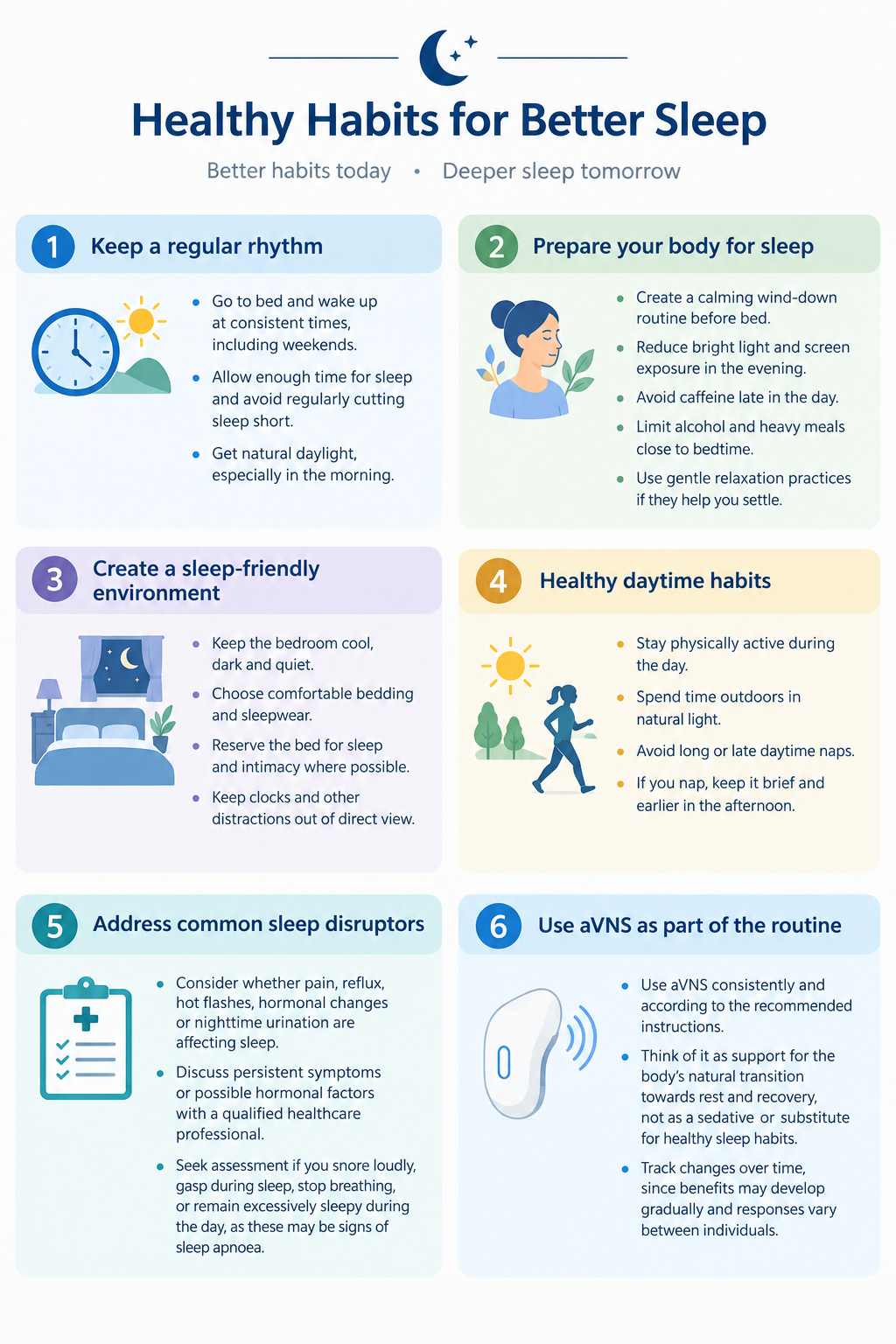
For the best response, we recommend combining your Luminnova InnateSignal™ Sleep Program with the healthy sleep practices illustrated below.
For someone struggling with persistent poor-quality or unrefreshing sleep, the research provides genuine reason for optimism. Sleep is one of the areas in which aVNS has progressed beyond biological theory: improvements have been demonstrated clinically and supported by objective measurements of sleep and nervous-system function.
Click here to return to the Main aVNS Clinical Evidence Guide